

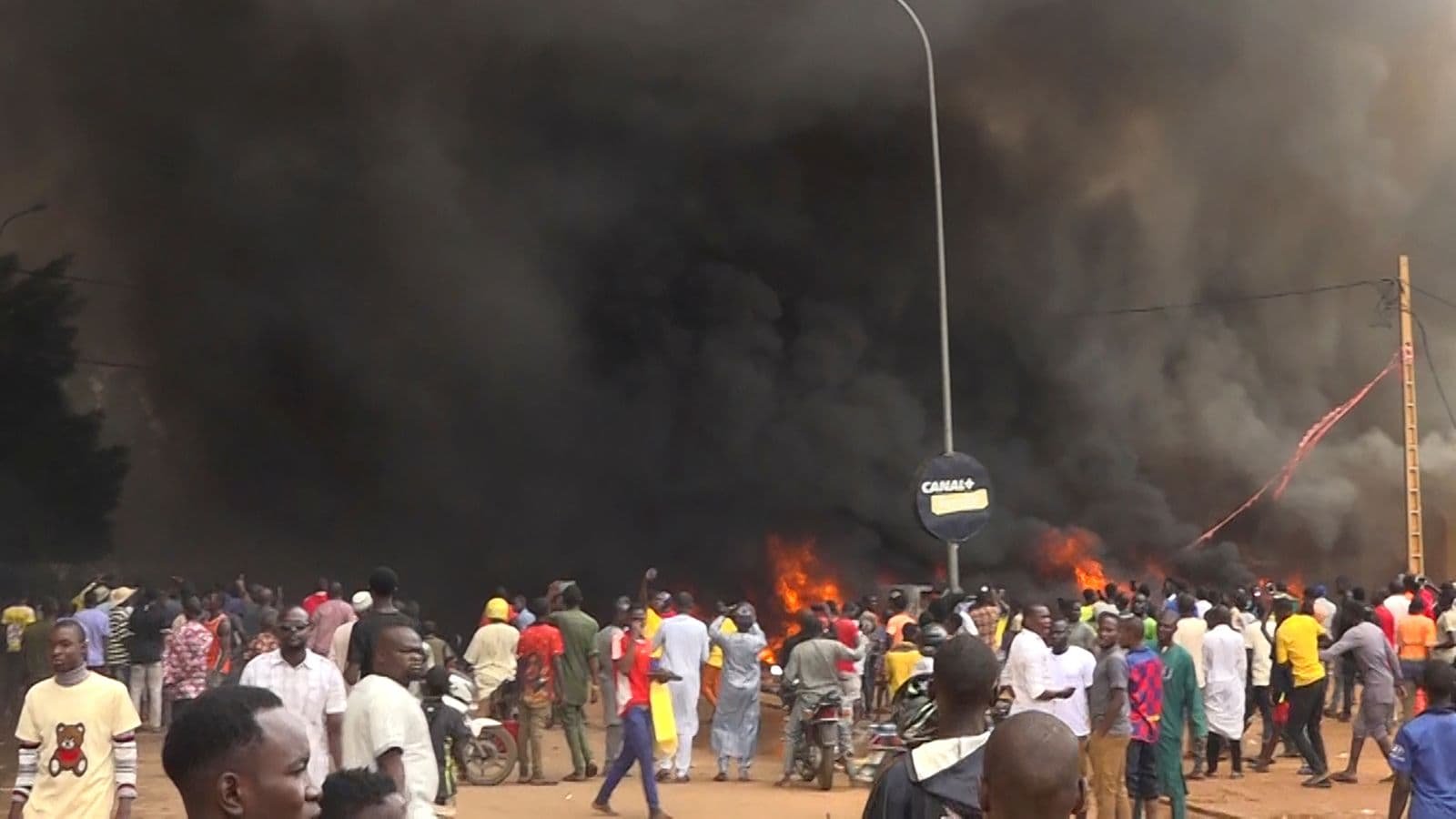
More than one million people are currently forcibly displaced in Niger, according to figures released this week by the United Nations High Commissioner for Refugees (UNHCR). The agency reports that over half of them are internally displaced persons (IDPs), mainly concentrated in two southern regions of the country heavily affected by terrorist group activity. The rest are refugees and asylum seekers. These populations are in urgent need of assistance in what the UN describes as a “complex” humanitarian environment.
In total, Niger hosts more than half a million internally displaced people, over half of whom are children, while 23% are women. UNHCR data indicates an 8% annual increase in displacement figures. However, the agency notes that trend analysis remains limited, as data is only irregularly validated by Nigerien authorities.
Security deterioration in key regions
Of the nearly 550,000 internally displaced persons, 45% are located in the Tillabéri region in southwestern Niger. The UNHCR has previously reported a significant deterioration in security in this area, marked by frequent attacks targeting both civilians and security forces, mass displacement, and heightened protection risks, particularly in border zones.
Another one-third of displaced people are in the Diffa region, which also continues to face sustained pressure from armed terrorist groups.
Refugees and asylum seekers
In addition to internally displaced persons, Niger is also hosting around 447,000 refugees and asylum seekers. More than half of them are children. The majority come from Nigeria, followed by Mali and Burkina Faso. Their numbers have increased by 3% over the past year, largely due to improved registration processes, according to the UNHCR.
Across the wider Sahel region—which includes Mali, Burkina Faso, and Niger—UN Secretary-General António Guterres warned on May 13, 2026, that the worsening security situation has created a major humanitarian emergency. Speaking at a press conference at the African Union headquarters in Addis Ababa, he highlighted escalating violence against civilians, mass displacement, and growing food insecurity across the region.







Leave a comment