

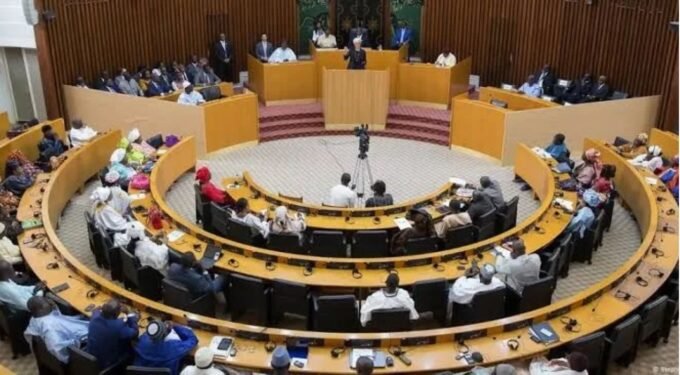
Senegal’s supplementary budget bill was referred back to the Finance Committee on Tuesday, October 27, 2026, at the request of Economy and Finance Minister Cheikh Diba. The move aims to facilitate a compromise between the government and lawmakers from Pastef, which holds a parliamentary majority, amid strong opposition to the revised budget.
The minister called for dialogue to prevent an institutional deadlock. Lawmakers approved the request, paving the way for further discussions in committee before the bill returns to a plenary session. A new date for the session has yet to be scheduled.
Disagreements centre on the government’s proposed measures to address the budget deficit. The executive plans to cut public investment by 555 billion CFA francs, equivalent to approximately €846 million. Ousmane Sonko’s Pastef party opposes the reductions, particularly those affecting the health and education sectors. Lawmakers are also calling for a legal framework governing the special funds available to the executive without legislative oversight.
The government argues that a budget revision is necessary because of declining revenue and rising expenditure. However, lawmakers have limited room for manoeuvre, as amendments are only admissible if they increase revenue or reduce spending.
The dispute comes as Senegal faces a severe economic crisis. Public debt was estimated at 132% of gross domestic product (GDP) at the end of 2024. In September, the International Monetary Fund (IMF) announced a preliminary agreement with Dakar on a new $2.2 billion assistance programme spanning 36 months. The agreement has yet to be approved by the institution’s Executive Board and remains subject to certain conditions.










Leave a comment