

Senegal’s rice industry is warning of a deepening crisis as nearly 250,000 tonnes of locally produced rice remain unsold, with producers struggling to compete against cheaper imported rice despite the government’s commitment to food sovereignty.
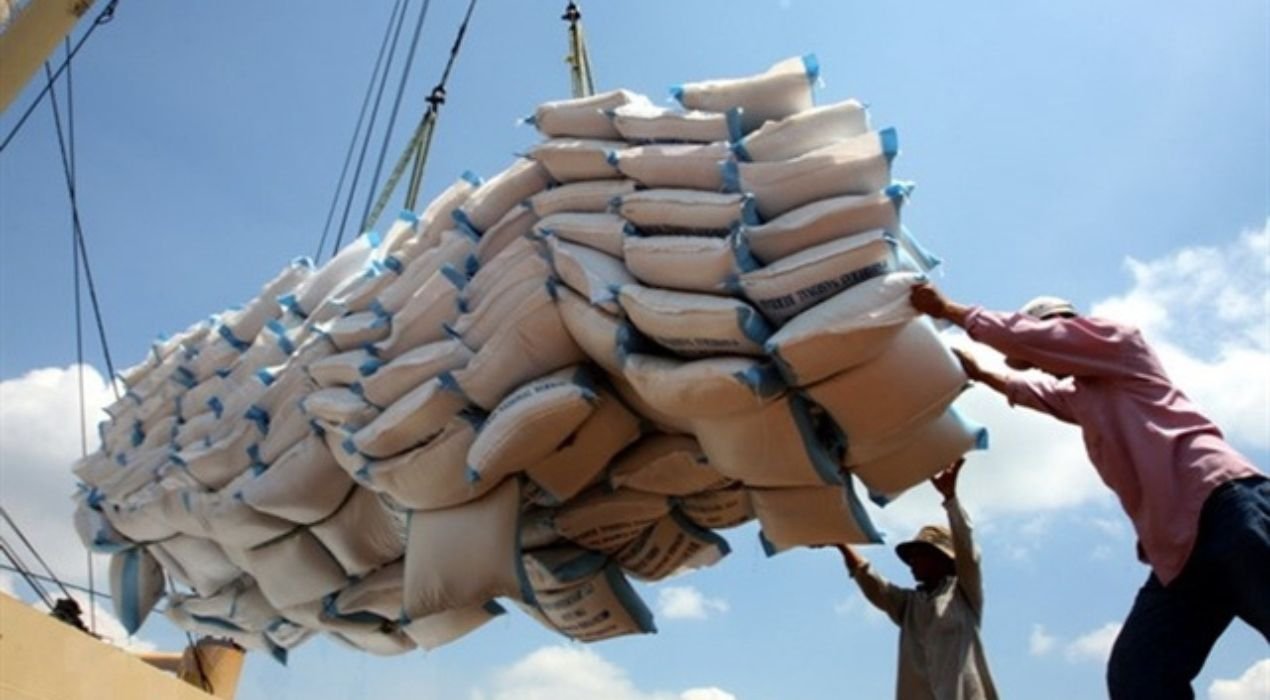
According to industry representatives, about 37,000 tonnes of milled rice are currently sitting in storage facilities in the Senegal River Valley. In the northern department of Dagana alone, producers have accumulated 36,000 tonnes of unsold rice in warehouses that are now operating at full capacity.
The situation is further compounded by this year’s harvest from 49,000 hectares, which has yielded an estimated 294,000 tonnes of unmilled paddy rice awaiting processing and sale.
Industry leaders describe the situation as an unprecedented marketing crisis that threatens the survival of local producers.
Marie Rassoul, Secretary General of the National Association of Rice Producers of Senegal, said the lack of sales is preventing farmers and processors from repaying bank loans or financing the next planting season.
She blamed the crisis on weak market regulation and the government’s failure to give sufficient priority to locally produced rice.
One of the industry’s main concerns is the continued importation of lower-priced Asian rice, which sells for around 300 CFA francs per kilogram. While imports help meet domestic demand during periods of limited local production, producers argue they are directly competing with Senegalese rice even when local supplies are available.
According to Rassoul, an agreement reached with the government in November has not been respected. The deal reportedly limited imported rice to 100,000 tonnes and required that 10% of the rice marketed come from domestic production.
She also said authorities failed to implement a planned 50 CFA franc subsidy for rice importers designed to encourage them to purchase locally produced rice despite its higher price.
The crisis has intensified questions about Senegal’s strategy to achieve food sovereignty, a key objective repeatedly promoted by the government.
Frustrated by what they describe as a lack of concrete action, representatives of the rice sector boycotted a meeting at the Ministry of Industry and Commerce on July 8, arguing that discussions could not continue without stronger government commitments.
Producers are now calling for urgent measures to protect the domestic market, reduce dependence on imports, and ensure that locally grown rice plays a central role in Senegal’s long-term food security strategy.
Former Ivorian president (2000–2011) and current opposition figure Laurent Gbagbo has been reconfirmed as head of his political party on Friday, despite previously...
Byredacteur3.0mai 15, 2026Syria officially reopened its embassy in Morocco on May 14, 2026, marking a significant diplomatic reset between Rabat and Damascus after 14 years...
Byredacteur3.0mai 15, 2026The Cameroonian government has announced stricter controls in the gold sector to...
Byredacteur3.0juillet 16, 2026Several dozen students staged a peaceful protest outside the French Embassy in...
Byredacteur3.0juillet 15, 2026Burkina Faso has officially ended its diplomatic presence in France following the...
Byredacteur3.0juillet 14, 2026A tragic road accident occurred on Monday 13 July 2026 in Mali’s...
Byredacteur3.0juillet 14, 2026Excepteur sint occaecat cupidatat non proident
Leave a comment