

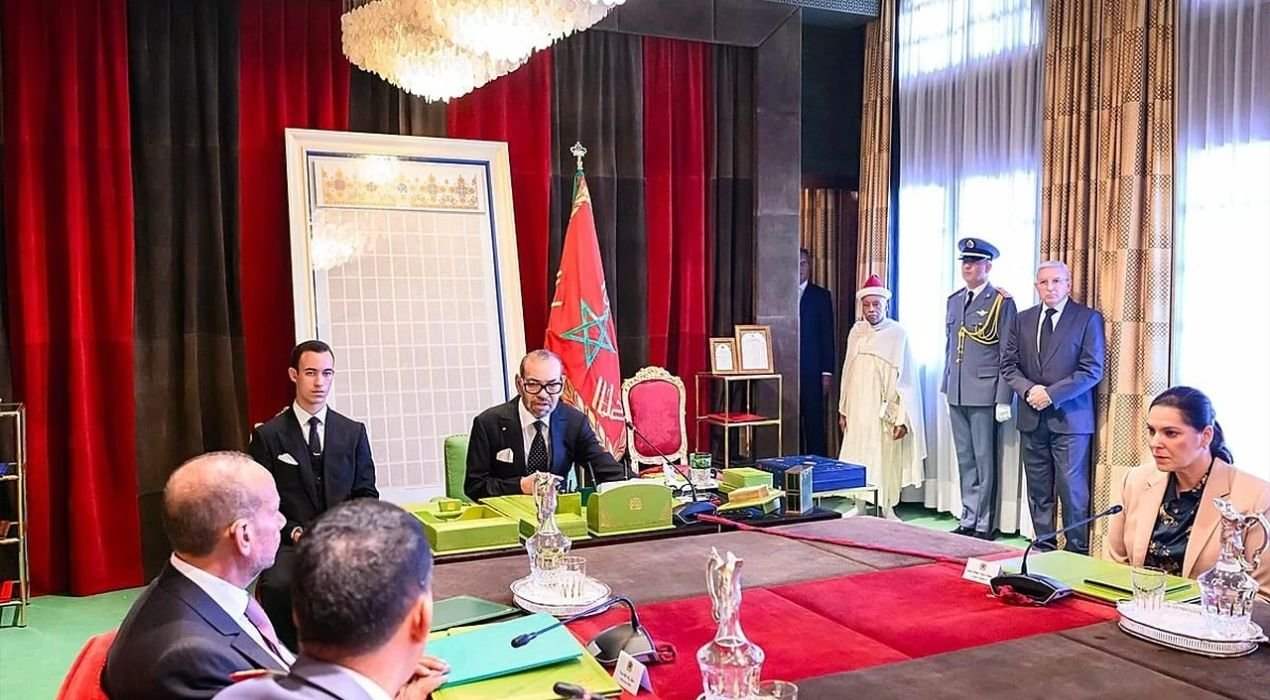
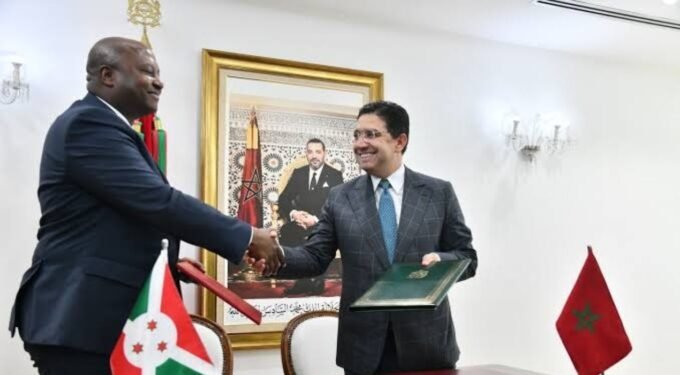
King Mohammed VI chaired the signing of two framework agreements in Rabat on Wednesday, 25 November 2026, aimed at accelerating the development of the national defence and security industry. Nearly 22 billion dirhams have been mobilised as part of the strategy, which seeks to strengthen the Kingdom’s industrial sovereignty and create 50,000 jobs by 2035.
Accompanied by Crown Prince Moulay El Hassan, the King presided over the ceremony at the Royal Palace in Rabat. The two agreements form part of the implementation of the “Morocco Offer”, a roadmap designed to establish a national industrial and technological base in the defence and security sectors.
The first agreement concerns the financing of this roadmap. The second aims to mobilise private companies and financial institutions to support its implementation. The initiative is intended to bring together public-sector stakeholders, investors and industrial players in building a new strategic industry.
Ambitious industrial targets for 2035
Ali Seddiki, Director General of the Moroccan Agency for Investment and Export Development (AMDIE), which is responsible for overseeing the operational preparation of the roadmap, presented the project’s main ambitions.
Ultimately, manufacturers based in Morocco are expected to meet 40% of the needs of the Royal Armed Forces and security agencies. The industry also aims to generate at least 50 billion dirhams in annual revenue, with more than 65% coming from exports.
The programme also provides for the creation of at least 50,000 direct and indirect jobs by 2035. According to Ali Seddiki, the strategy is intended to enable the Kingdom to build a sovereign, high-performing, innovative and competitive defence industrial and technological base.
DIFAA, a strategic agency to oversee the industry
At the heart of the initiative is the future Moroccan Agency for the Defence and Security Industry, named “DIFAA” by King Mohammed VI. The acronym stands for Defense Industry Facilitation and Acceleration Agency. The agency will be responsible for supporting investment, monitoring the commitments made by public- and private-sector partners, and helping to structure the national industrial base.
Its areas of operation will include drones and autonomous systems, land and naval equipment, defence electronics, cyber defence and artificial intelligence. To support these activities, the agency will draw on several instruments, including public procurement, industrial offsets, land allocation, training and innovation.
Public and Private Sectors Join Forces on Financing
The two framework agreements bring together several government, financial and economic institutions. Signatories include ministers Abdelouafi Laftit, Fouzi Lekjaa, Ryad Mezzour and Abdeltif Loudyi, as well as representatives of the Deposit and Management Fund (CDG), the Hassan II Fund for Economic and Social Development and Mohammed VI Polytechnic University (UM6P).
The second agreement also involves Bank Al-Maghrib, the Professional Grouping of Moroccan Banks (GPBM), the General Confederation of Moroccan Enterprises (CGEM), the Moroccan Capital Market Authority (AMMC), the Casablanca Stock Exchange and the Moroccan Association of Capital Investors (AMIC).
Beyond the announced funding, Morocco intends to mobilise its industrial base, financial institutions and scientific expertise to develop a national industry geared towards the needs of its armed forces and international markets.









Leave a comment