

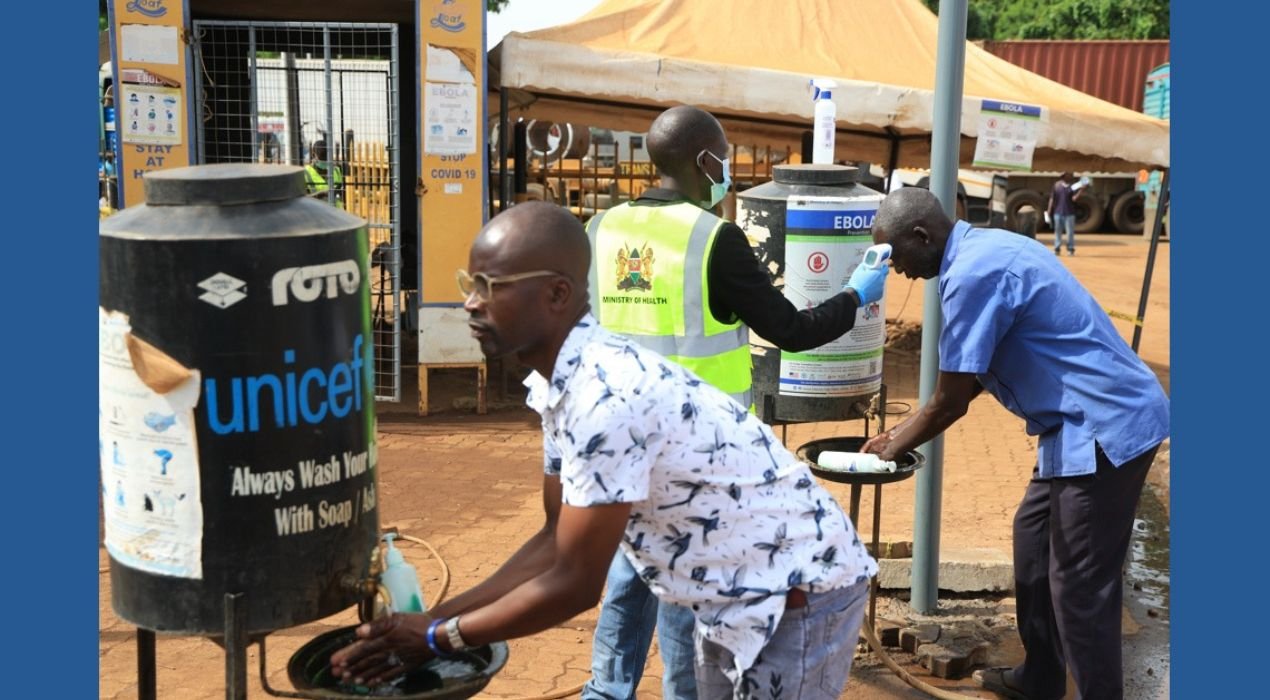
Kenya’s High Court has ruled that the establishment of a US-backed Ebola quarantine centre at a military base in Laikipia was unconstitutional. The ruling, delivered on Thursday, 26 November, cited the lack of public consultation and the authorities’ failure to provide transparent information about the project.
The court ordered the government to make public, within 45 days, the agreements reached with Washington and all documents relating to the facility. It also prohibited any further construction work and the centre’s operation until the court’s requirements have been met.
The 50-bed facility is located at Laikipia Air Base, near Nanyuki in central Kenya. The project had faced strong opposition from neighbouring communities, who were concerned about the risk of exposure to the virus and the Kenyan healthcare system’s ability to respond to a potential outbreak.
Project challenged over lack of transparency
The legal proceedings were initiated by the Law Society of Kenya and the Katiba Institute. The two petitioners raised concerns about the lack of publicly available information on the centre’s operating conditions, biosafety measures and agreements reached between Nairobi and Washington.
Judge Patricia Nyaundi ruled that the authorities had failed to meet their constitutional obligations regarding transparency, accountability and public participation. The court also ordered the publication of health, environmental and security assessments, administrative permits, and protocols governing the reception and isolation of people exposed to the virus.
According to statements by US administration officials, the centre was intended in particular to accommodate American nationals exposed to Ebola abroad. Washington had also planned to allocate $13.5 million to strengthen Kenya’s capacity to respond to the disease.
Deadly protests erupt around the centre
The announcement of the project triggered several protests in the Laikipia region. Residents feared that their area would become a site for accommodating potentially infected people without sufficient guarantees for their safety. The demonstrations resulted in deadly violence.
In May, the High Court had already ordered construction work to be suspended pending its examination of the case. The 26 November ruling further reinforces requirements for transparency and public consultation surrounding the facility.
Nine Ebola cases recorded in Kenya
Kenya recorded its first imported case of Ebola virus disease in October 2026. The initial patient had travelled from the Democratic Republic of the Congo through Uganda. Eight other people, all linked to the first case, were subsequently infected, bringing the total to nine confirmed infections.
According to World Health Organization data published in mid-November, two deaths had been recorded, while the seven other patients had recovered. No new cases had been reported since 19 October.
The High Court’s ruling therefore comes as Kenyan authorities seek to balance preparedness for public health emergencies with respect for the constitutional rights of the communities concerned.













Leave a comment