

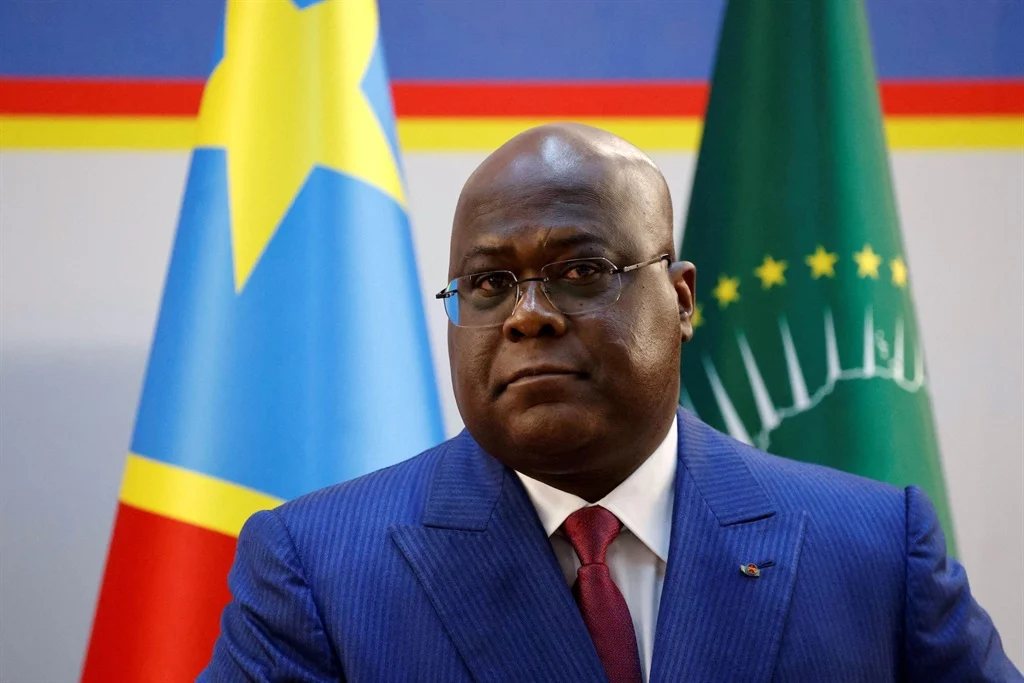
Political tensions are rising in the Democratic Republic of the Congo after the National Assembly approved a controversial bill defining the procedures for organizing a national referendum — a move the opposition says could pave the way for President Félix Tshisekedi to seek a third term in office. The bill was adopted on Thursday, May 28, despite a boycott by opposition lawmakers and growing calls for nationwide protests.
Opposition Denounces “Constitutional Coup”
Members of the opposition coalition Ensemble pour la République strongly condemned the initiative, accusing the ruling majority of attempting to undermine constitutional term limits.
Christian Mwando Nsimba, head of the Ensemble parliamentary group, described the referendum project as “a plot against the Constitution.”
“The final objective of this process is to change the number and duration of presidential mandates and reduce the constitutional powers of the provinces in order to establish a dictatorship,” he declared during parliamentary debates.
Under the current Congolese Constitution, Tshisekedi — elected in 2018 and re-elected in 2023 — is not eligible to run for another term after 2028.
Government Defends the Reform
The ruling coalition rejected accusations of constitutional manipulation, insisting that the proposed legislation is merely intended to provide a legal framework allowing citizens to express themselves on major national issues through referendums.
“The purpose of this text is to equip the Republic with a legal instrument allowing the sovereign people to express themselves on important matters of national life,” argued parliamentary speaker Aimé Boji before the vote.
He also criticized the opposition boycott, saying those refusing to participate were free to leave the chamber.
Tshisekedi Keeps Door Open to Another Mandate
In recent months, President Tshisekedi has increasingly fueled speculation about his political future by suggesting he could remain in office if the population demanded it.
“I did not ask for a third term. But if the people want me to have one, I will accept,” he said during a public appearance earlier this month.
Those remarks have intensified concerns among opposition parties and civil society organizations, many of whom fear a scenario similar to constitutional revisions seen in several African countries where presidential term limits were extended or removed.
Opposition Calls for Mass Demonstrations
In response to the parliamentary vote, opposition leaders have announced plans for demonstrations and acts of civil disobedience.
Martin Fayulu, leader of the Ecidé party and one of Tshisekedi’s main political rivals, called on citizens to stay home on June 3 as a sign of protest.
“We ask parents not to send their children to school and not to go to work or the market. We want to prove to Mr. Tshisekedi that the people reject this project,” Fayulu declared.
A Sensitive Political Moment
The referendum debate comes at a particularly fragile time for DR Congo, which continues to face security challenges in its eastern regions, economic pressures, and political polarization.
Analysts warn that any attempt to revise constitutional term limits could deepen tensions in a country with a long history of disputed political transitions and institutional crises.
For now, the adoption of the referendum bill marks only an initial step. However, it has already opened a new and highly contentious chapter in Congolese politics, with the question of presidential succession once again moving to the center of national debate.






Leave a comment