

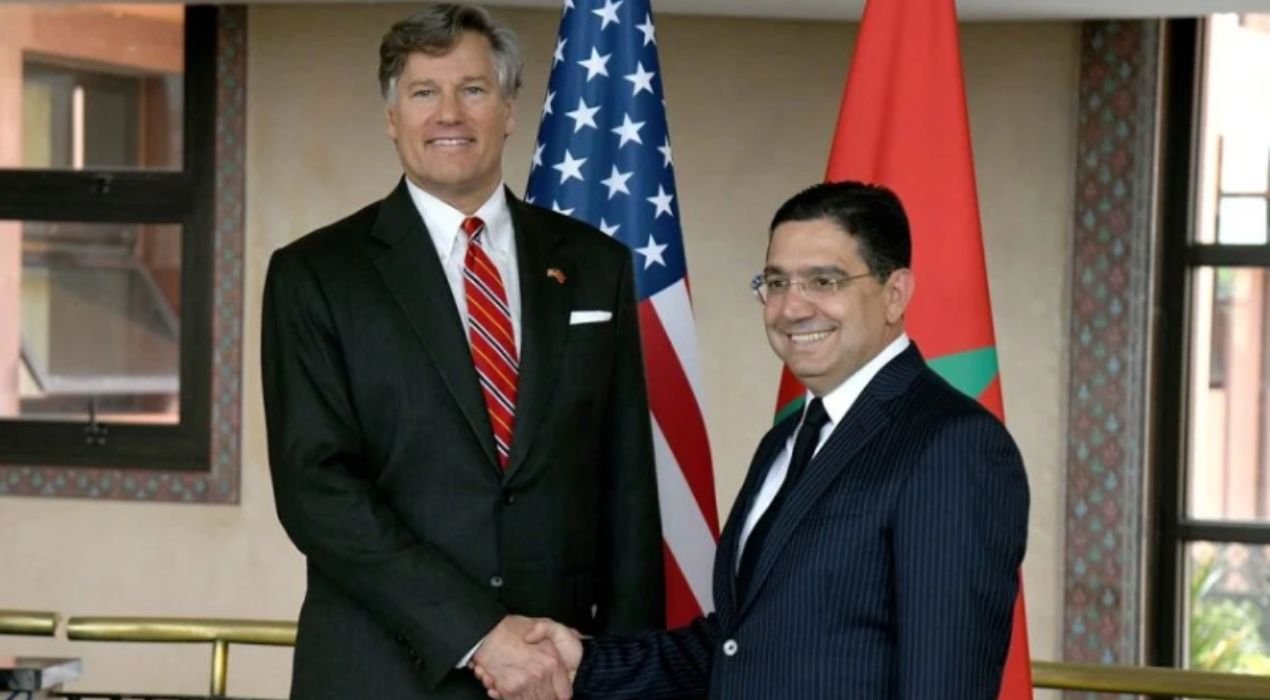
Morocco has become the 64th country to sign the Artemis Accords, marking a significant step for Africa’s presence in global space diplomacy. The agreement was signed on April 29 in Rabat by Foreign Minister Nasser Bourita and U.S. Deputy Secretary of State Christopher Landau.
This move positions Morocco among a growing coalition of nations shaping the rules for future space exploration, including missions to the Moon and beyond. It also makes Morocco the first African country to formalize such an agreement in its own capital through a bilateral signing with the United States.
The accords, spearheaded by the NASA, establish principles for responsible space activity, including transparency, interoperability, and the peaceful use of outer space. By joining, Morocco gains a voice in emerging frameworks that could govern resource utilization and scientific collaboration in space.
Strategically, the signing reflects deepening ties between Rabat and Washington. It coincides with the long-standing diplomatic relationship between the two countries and comes amid renewed U.S. support for Morocco’s position on the Sahara issue — underscoring the geopolitical dimension of the agreement.
For Africa, Morocco’s entry into the Artemis framework highlights the continent’s gradual integration into high-tech and strategic sectors traditionally dominated by global powers. While countries like South Africa and Nigeria have developed space capabilities, Morocco’s move signals a shift toward greater involvement in international space governance.
The decision also aligns with Morocco’s broader ambitions to position itself as a regional leader in infrastructure, innovation, and global partnerships, particularly as it prepares to co-host the FIFA World Cup 2030.
As space becomes an increasingly competitive and strategic domain, Morocco’s participation in the Artemis Accords reflects a wider trend: Africa is no longer on the sidelines of the space race — it is beginning to claim its place at the table.














Leave a comment