

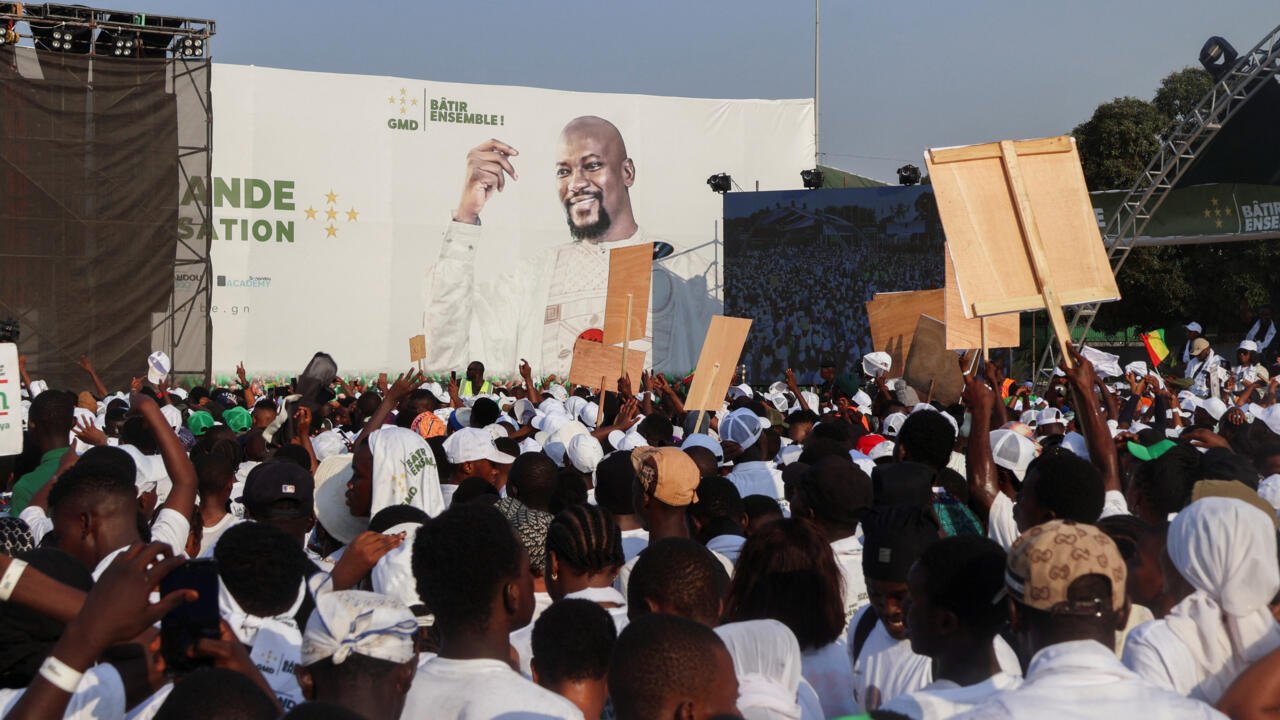
Guinea’s electoral authorities announced provisional results overnight following the legislative and municipal elections held on May 31, with the ruling coalition securing an overwhelming victory across the country. The twin polls took place in an unusual political environment marked by the absence of several major opposition parties, including the former ruling RPG and the UFDG, both dissolved in March and among the groups that had called for a boycott of the vote.
As expected, the presidential movement, Génération pour la Modernité et le Développement (GMD), led by President Mamadi Doumbouya, emerged as the dominant political force in both parliamentary and local elections.
Near-Total Control of Parliament
According to provisional results released by the General Directorate of Elections, GMD and its allied parties won almost all seats in the 147-member National Assembly. Opposition groups that participated in the election, including the Democratic Front of Guinea (Frondeg) and the Liberal Bloc, secured only one parliamentary seat each, highlighting the extent of the ruling coalition’s dominance. The results further strengthen President Doumbouya’s political position as Guinea continues its transition following the 2021 military takeover.
Strong Showing in Municipal Elections
The ruling coalition also performed strongly in local elections, winning either absolute or relative majorities in nearly all municipal councils across the country. From the capital, Conakry, to major regional cities, opposition lists failed to secure control of any significant municipality, according to the provisional figures. Despite reports of low voter turnout during election day, electoral authorities announced participation rates of 53 percent in the legislative elections and 59 percent in the municipal vote.
Election Process Faces Criticism
While the results were widely anticipated, the conduct of the elections has already sparked criticism from some political actors and election observers. The West Africa Network for Peacebuilding (WANEP), which monitored the polls, reported several operational shortcomings in the organization of the vote. The observer mission also cited documented cases of corruption, political pressure, and administrative interference in certain constituencies. These findings have fueled concerns among opposition groups regarding the transparency and credibility of the electoral process.
Legal Challenges Expected
Under Guinea’s electoral law, parliamentary candidates have eight days to file formal appeals against the results, while candidates in municipal elections have three days to contest outcomes. The Democratic Front of Guinea, led by Abdoulaye Yéro Baldé, and the Liberal Bloc of Faya Millimono are expected to announce shortly whether they intend to pursue legal challenges.
A Key Step in Guinea’s Political Transition
The legislative and municipal elections represent another milestone in Guinea’s roadmap toward restoring constitutional order following the September 2021 coup that brought Mamadi Doumbouya to power. While the provisional results consolidate the influence of the ruling camp, the coming days will reveal whether opposition parties choose to contest the outcome and how electoral authorities respond to concerns raised about the voting process.





Leave a comment