

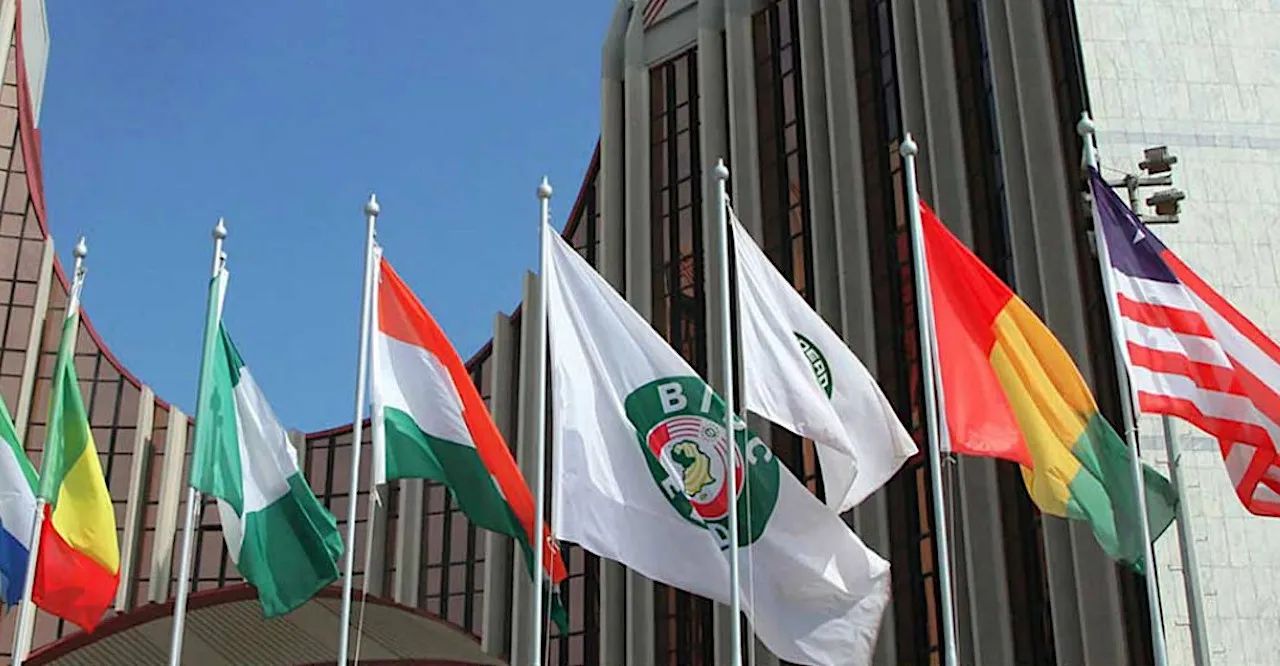
Fifty years after its creation, the Economic Community of West African States (ECOWAS) is still struggling to achieve its ambition of a fully integrated common market across the region. Despite its vast economic potential, the bloc continues to face major structural obstacles, including deteriorated road networks, administrative bottlenecks, high logistics costs, and persistent roadside harassment. Difficult access to financing also remains a key barrier for businesses operating across borders.
As a result, small and medium-sized enterprises (SMEs)—which form the backbone of West Africa’s economy—remain particularly affected, with reduced competitiveness and limited cross-border expansion.
Low level of intra-regional trade
The ECOWAS space represents a market of more than 400 million people, yet intra-regional trade remains weak. Estimates suggest that trade between member states accounts for only 10% to 15% of total regional commerce, far below the European Union’s internal trade level, which exceeds 60%.
This gap is largely attributed to persistent structural challenges, including poor transport infrastructure, multiple checkpoints along trade corridors, and informal payments that increase the cost of moving goods.
“Measures are in place to facilitate trade and transit to allow goods and services to circulate more quickly and efficiently across borders,” said Kolawole Sofola. “ECOWAS is working to address not only physical infrastructure challenges but also more complex issues, including non-tariff barriers.”
High trade costs and financing challenges
According to the World Trade Organization, intra-African trade costs are about 20% higher than trade with external partners. These constraints disproportionately affect SMEs.
In West Africa, nearly 25% of trade finance applications are rejected—more than twice the global average. As a result, many companies restrict their activities to domestic markets or abandon plans to export to neighbouring countries.
This weak competitiveness also limits local industrial transformation and reinforces the region’s dependence on imported finished goods.
Infrastructure corridors as a solution
ECOWAS officials highlight major infrastructure projects as a key solution to these challenges. One priority corridor is the Abidjan–Lagos highway, a 1,000-kilometre route expected to link five West African countries and boost regional economic integration.
“The member states have decided to ensure that the major corridors we are developing not only support growth and transport, but also serve as economic development axes,” said Sofola, noting cooperation with institutions such as the African Development Bank and the European Union.
Untapped economic potential
Despite these challenges, the region holds significant untapped potential. The OECD estimates that intra-regional food trade in West Africa is worth nearly $10 billion annually, with flows capable of feeding tens of millions of people.
Experts say reducing trade costs is now a matter of economic sovereignty. Priorities include improving transport corridors, modernising infrastructure, harmonising customs regulations, and accelerating digital trade systems.
Link with continental integration efforts
The push for deeper integration comes as Africa advances the African Continental Free Trade Area (AfCFTA), designed to boost trade across the continent.
In April 2026, ECOWAS held discussions in Côte d’Ivoire focusing on investment, food trade, and migration policies as part of broader efforts to overcome longstanding integration challenges.









Leave a comment