

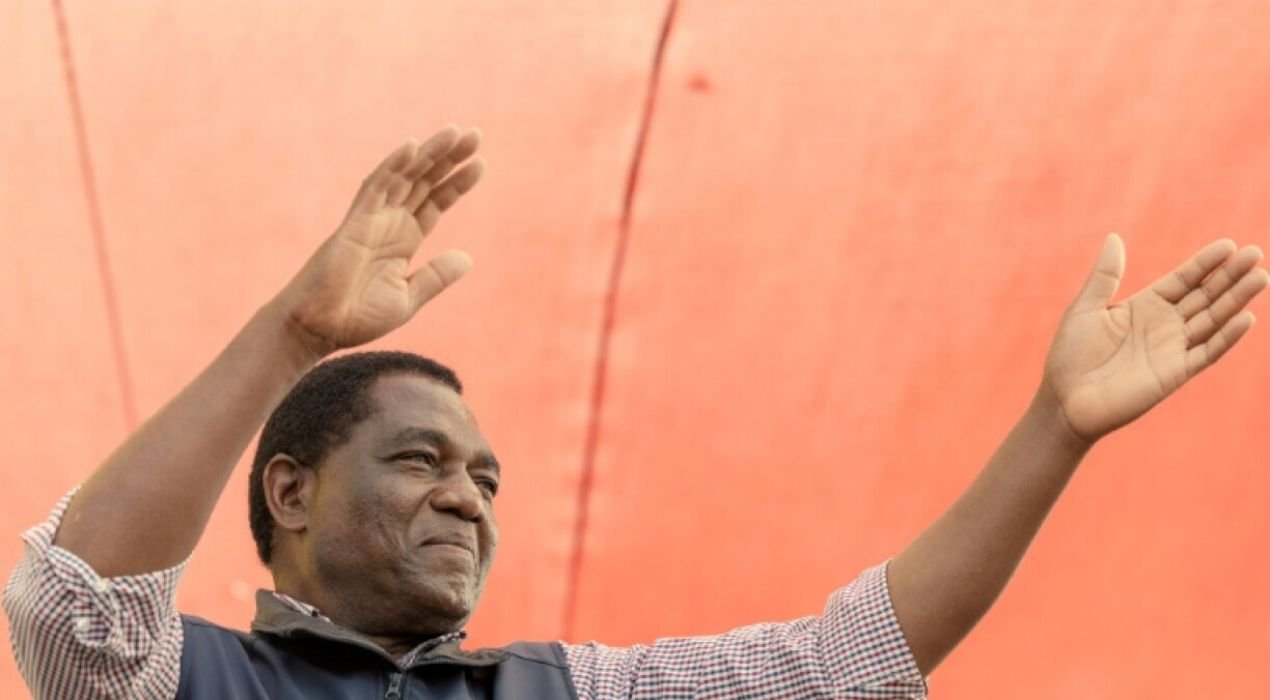
Zambian President Hakainde Hichilema has been re-elected for a second five-year term, securing around 60% of the vote in the August 13 presidential election, according to the Electoral Commission of Zambia. His main challenger, Brian Mundubile, won about 38%.
The result extends Hichilema’s presidency beyond 2026, but the election has been overshadowed by allegations of irregularities, violence and restrictions targeting opposition figures.
The electoral commission said that only a small number of constituencies remained to be fully processed and that the outstanding results would not materially change the overall outcome.
Following the announcement, supporters of Hichilema and his United Party for National Development (UPND) took to the streets of Lusaka to celebrate his victory.
“We are deeply touched by the trust you have placed in us,” Hichilema said after the results were announced.
He also called for an inclusive approach towards voters who supported his opponents.
Opposition raises concerns over vote counting
The election was marked by an unusually tense post-election period.
Brian Mundubile had raised concerns about the vote-counting process, alleging that result documents may have been tampered with. His accusations came after the Electoral Commission temporarily suspended the counting process following incidents involving violence and attacks on election officials.
The situation was further complicated by the arrest of 11 people, including several opposition figures, on election night. Authorities said the arrests were linked to a suspected plot involving a militia and threats to state security. Opposition representatives rejected the allegations and accused the government of political intimidation.
Mundubile also reported that armed men had raided his home, an incident that heightened tensions surrounding the election.
International observers expressed concern over the electoral environment, including restrictions on opposition activities and the suspension of vote counting.
Hichilema’s economic record under scrutiny
The election was also a referendum on Hichilema’s economic record since he took office in 2021.
His government has overseen significant progress in debt restructuring and macroeconomic stabilisation, while seeking to attract investment into Zambia’s mining sector, particularly copper.
Investors have welcomed the prospect of policy continuity following his re-election. The government is now expected to focus on translating economic stabilisation into stronger growth and job creation.
However, the economic recovery has not benefited all Zambians equally. High living costs, poverty and concerns over access to jobs remain major challenges.
Zambia is Africa’s second-largest copper producer, and Hichilema has made increasing copper production a central element of his economic strategy.
A second term with major challenges ahead
Hichilema’s victory gives him another five years to implement his economic agenda, but his administration will face pressure to deliver more tangible improvements in living standards.
The president will also have to address concerns over democratic freedoms and relations with the opposition, particularly after a campaign and election period marked by arrests, violence and accusations of political interference.
For Zambia, a country with a long tradition of peaceful transfers of power, the challenge will now be to ensure that the new mandate strengthens both economic recovery and democratic confidence.






Leave a comment