

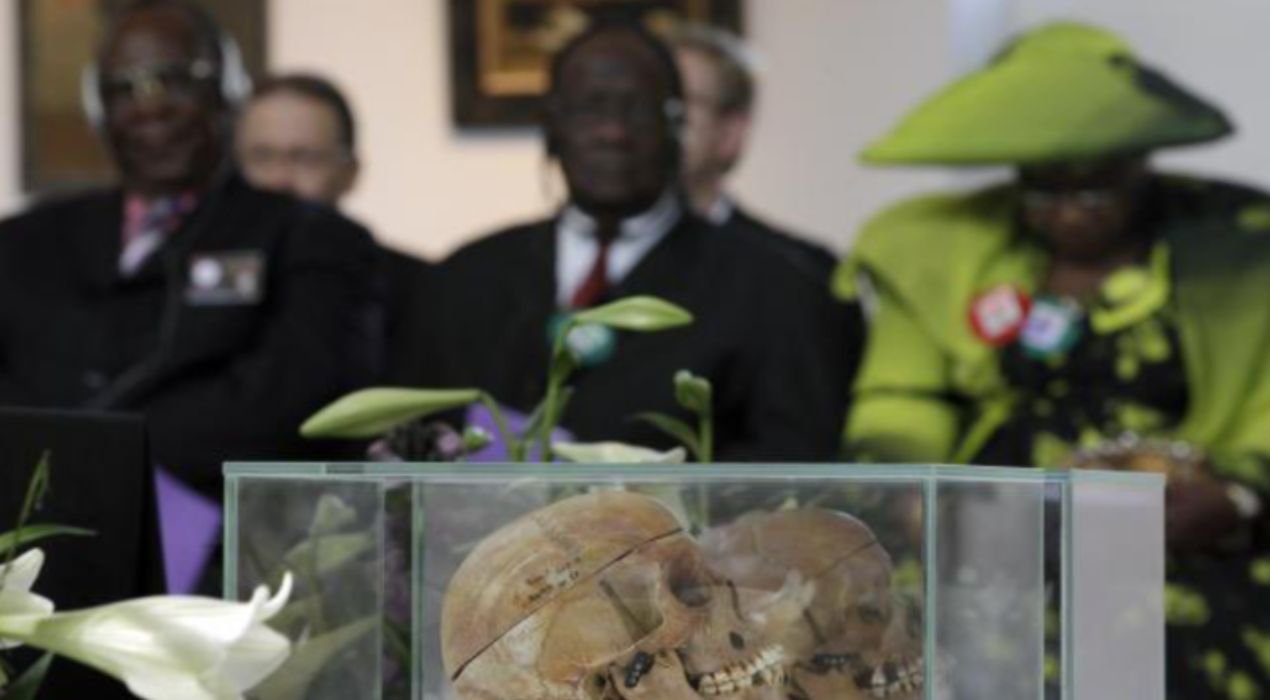
South Africa has returned the remains of more than 80 people to Namibia, including individuals who died during the colonial era and under apartheid rule. A repatriation ceremony was held in Cape Town on Wednesday, August 19, 2026, before the remains were transported back to Namibia.
The operation responds to a long-standing request from Namibia, which has been campaigning for the return of human remains held abroad. It also forms part of South Africa’s recently launched reparative justice programme.
Former Robben Island prisoners among those returned
Among the remains are those of Festus Nehale and Simon Niilenge, two Namibian activists who were imprisoned on South Africa’s Robben Island while fighting for their country’s independence.
Nehale died in 1971 and Niilenge in 1974. Both were buried in Cape Town.
South Africa has also returned human remains that had been kept in the collections of the Iziko Museums. Some were taken during the colonial period, when human bones were collected and studied as part of racist attempts to establish a supposed racial hierarchy.
South Africa’s Culture Minister described the repatriation as an act of “reparative justice, dignity and healing.”
He said the return would allow families and communities to honour their ancestors on their own land.
“They are now citizens of a free and sovereign republic”
Namibian Education Minister Sanet Steenkamp said the people whose remains were being returned had left their country as “subjects of a colonial order”.
Their return, she said, has a different meaning today.
“With their return to Namibia, they are now citizens of a free and sovereign republic.”
The ceremony therefore carried both a personal and historical significance, reconnecting families with relatives whose remains had spent decades outside Namibia.
Reburial planned for Heroes’ Day
Festus Nehale and Simon Niilenge are expected to be reburied next Wednesday during Namibia’s Heroes’ Day commemorations.
This year’s ceremonies will mark 60 years since the beginning of the country’s struggle for independence.
Namibia has been seeking the repatriation of human remains held in foreign institutions for many years.
Germany, the former colonial power in Namibia, has previously returned remains linked to the Herero and Nama communities, including repatriations in 2011, 2014 and 2018.
The latest return from South Africa adds another chapter to Namibia’s broader efforts to recover the remains of people taken from their homeland during the colonial and apartheid eras.




Leave a comment