Home Society Malaria remains a major health threat in Africa as new mosquito species spreads
Society

Malaria remains a major health threat in Africa as new mosquito species spreads
Share
Share

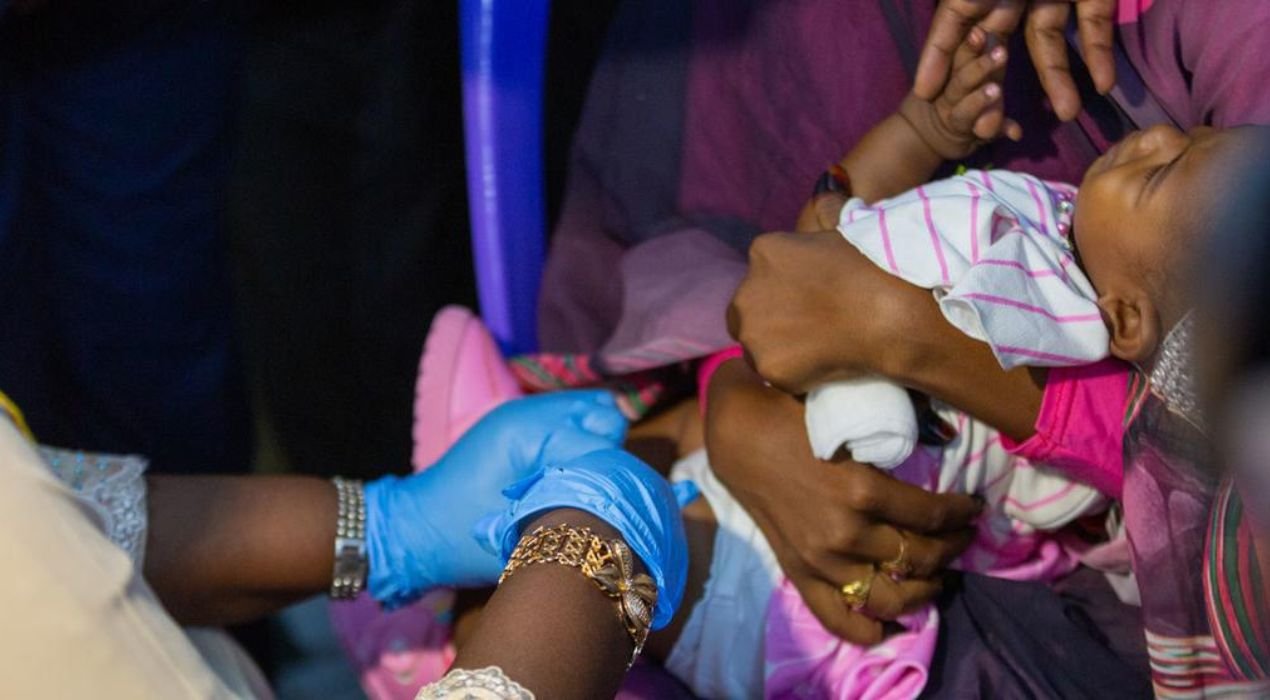
Despite significant progress in malaria prevention and treatment, the disease remains one of Africa’s biggest public health challenges. In 2024, around 579,000 people died from malaria in Africa, according to the World Health Organization (WHO). Children under five accounted for roughly three-quarters of malaria deaths on the continent. The fight against the disease is also becoming more complicated with the spread of a mosquito species particularly well adapted to Africa’s rapidly growing cities.

Anopheles stephensi complicates malaria control

One of the emerging challenges is the spread of Anopheles stephensi, a mosquito species originally from South Asia.

It was first detected in Djibouti in 2012 and has since been reported in several East African countries. More recently, its presence has also been confirmed in West Africa, including Nigeria and Ghana.

What concerns malaria specialists is the mosquito’s ability to thrive in urban environments.

Unlike several traditional malaria vectors in Africa, Anopheles stephensi can breed in artificial water containers, tanks and other water-holding receptacles commonly found around homes.

This makes densely populated urban areas particularly vulnerable to its spread.

A mosquito capable of surviving extreme heat

Another worrying characteristic is the mosquito’s ability to survive very high temperatures during the dry season.

Normally, malaria transmission tends to decline during periods of extreme heat and dryness. But the resilience of Anopheles stephensi could extend the transmission season and potentially increase malaria transmission in African cities.

This is particularly concerning as the continent experiences rapid urbanisation and population growth.

Millions more people could be at risk

The potential impact could be substantial.

A modelling study cited in recent scientific research estimates that the combined effects of Anopheles stephensi expansion and urbanisation could expose more than 120 million additional Africans to malaria risk.

The emergence of this mosquito therefore adds another layer of complexity to malaria control efforts, which already rely heavily on insecticide-treated bed nets, indoor spraying, rapid diagnosis and effective treatment.

For health authorities, monitoring the spread of Anopheles stephensi and adapting mosquito-control strategies to urban environments will be increasingly important in the years ahead.

Share

Leave a comment

Laisser un commentaire

Votre adresse e-mail ne sera pas publiée. Les champs obligatoires sont indiqués avec *

Don't Miss

FIFA Forward Enterprise: Infantino promises bigger investments for African football

FIFA President Gianni Infantino has unveiled the ambitions behind the proposed FIFA Forward Enterprise (FFE), a new commercial structure that could significantly increase...

WAFCON 2026: Morocco defeat Algeria to strengthen quarter-final ambitions

Morocco continued their impressive campaign at the Women’s Africa Cup of Nations 2026 with a 1-0 victory over Algeria on Thursday, July 30,...

Related Articles

Algeria makes record drug seizure, dismantling international trafficking network

Algerian police have announced what they describe as the largest drug seizure...

South Africa returns remains of more than 80 Namibians in historic repatriation

South Africa has returned the remains of more than 80 people to...

Sudan and Saudi Arabia strengthen ties with new strategic cooperation council

Sudan and Saudi Arabia signed an agreement on Monday, August 17, to...

Angélique Kidjo: A Star on the Hollywood Walk of Fame for Africa

Beninese-French music icon Angélique Kidjo has been honoured with a star on...