

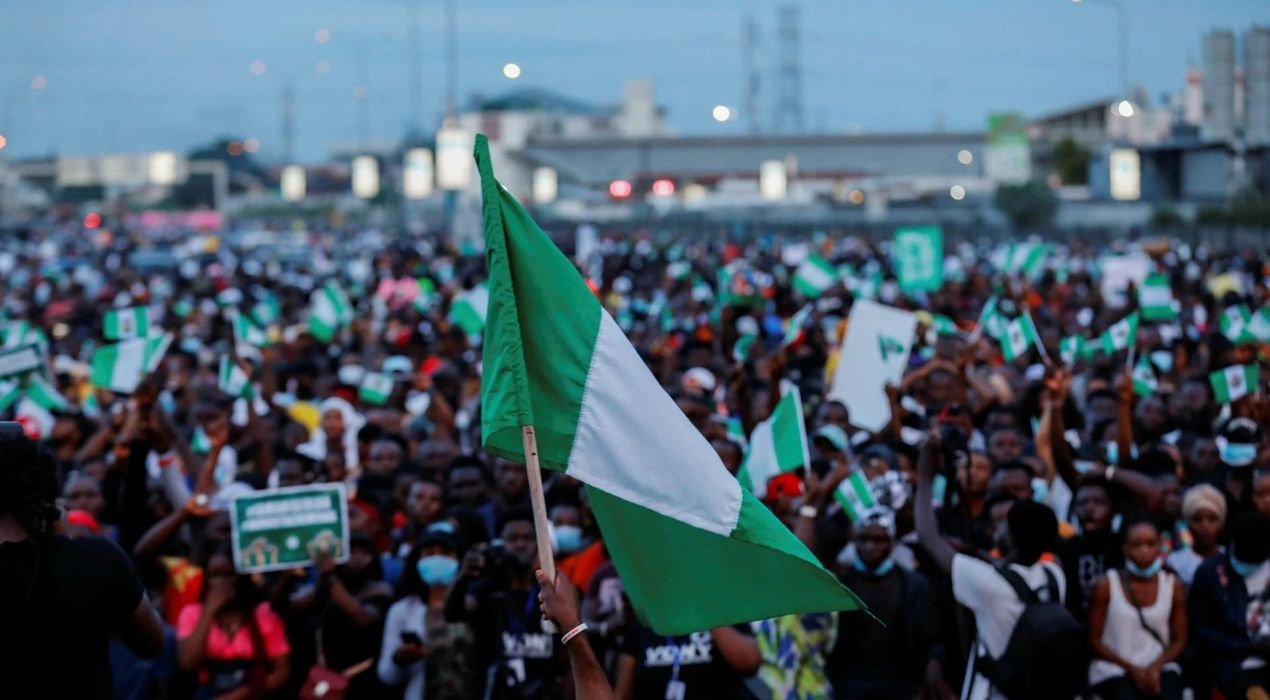
Nigeria’s presidential and parliamentary election campaign officially begins on Wednesday, August 19, 2026, five months ahead of the vote scheduled for January 16, 2027. A total of 19 candidates, including three women, are running for the presidency, among them incumbent President Bola Ahmed Tinubu. The election will also determine the 360 members of the House of Representatives.
More than 100 million voters are expected to take part across Africa’s most populous country. To win the presidency, a candidate must secure the highest number of votes nationally and obtain at least 25% of the vote in 24 of Nigeria’s 36 states.
Economy at the centre of the campaign
Two issues are expected to dominate the campaign: the economy and security. According to a survey by SBM Intelligence, around 34% of Nigerians say they are highly concerned about both their economic situation and their personal security. Tinubu’s ruling All Progressives Congress (APC) plans to campaign on the government’s economic reforms and achievements.
Since taking office, Tinubu has scrapped fuel and electricity subsidies, introduced tax reforms and overseen a major devaluation of the naira. His government has defended the measures as painful but necessary steps to put the Nigerian economy on a stronger footing.
Nigeria recorded 4% economic growth in 2025, while inflation fell to around 15.43%, compared with 33% in 2024. But the improvement in macroeconomic indicators has yet to fully translate into better living conditions for ordinary Nigerians. The cost of preparing a traditional pot of jollof rice for a family of five has risen to around €18, compared with €15 a year earlier, while the minimum monthly wage remains around €44.
Opposition seeks to challenge Tinubu
Several opposition figures are preparing to challenge the incumbent president. Former vice-president Atiku Abubakar, who finished second in the 2023 presidential election, is campaigning under the African Democratic Congress (ADC). His party is seeking to turn his strong online following into votes at the ballot box.
Peter Obi, who came third in 2023, is running under the National Democratic Congress (NDC) and is seeking to expand his support beyond his traditional stronghold in southeastern Nigeria.
His choice of running mate, Rabiu Musa Kwankwaso, a prominent politician from northern Nigeria, could help broaden his electoral appeal.
Meanwhile, the opposition G-100 coalition continues to push for a single candidate to face Tinubu. A summit scheduled for August 31 could determine whether the opposition succeeds in avoiding the fragmentation that weakened its chances in 2023.
Security remains a major concern
Security is another central issue as the campaign gets underway.
Nigeria continues to face attacks by armed groups commonly referred to as “bandits”, as well as jihadist organisations operating mainly in the north.
The government is fighting jihadist insurgencies on several fronts, while communal conflicts over land and resources continue to fuel violence in parts of central Nigeria.
The latest major attack occurred in Plateau State, where at least 24 people were reportedly killed overnight by gunmen armed with rifles and machetes.
The region has long been affected by tensions between predominantly Muslim Fulani pastoralists and predominantly Christian farming communities, particularly over access to land and resources.
Kidnappings also remain a major threat. Areas that had previously been considered relatively safer have increasingly been affected by mass abductions attributed to armed groups.
Security could affect the election campaign
The deteriorating security situation could have consequences beyond voters’ concerns.
In some parts of the country, security risks could make it difficult for candidates to organise rallies and campaign events. They could also discourage voters from travelling to polling stations on election day.
As Nigeria enters a five-month campaign period, Tinubu will seek to defend his economic record, while his opponents will attempt to capitalise on persistent cost-of-living pressures and insecurity.
The 2027 election is therefore shaping up as a major test of both the government’s reforms and the opposition’s ability to overcome the divisions that marked the previous presidential contest.



Leave a comment