

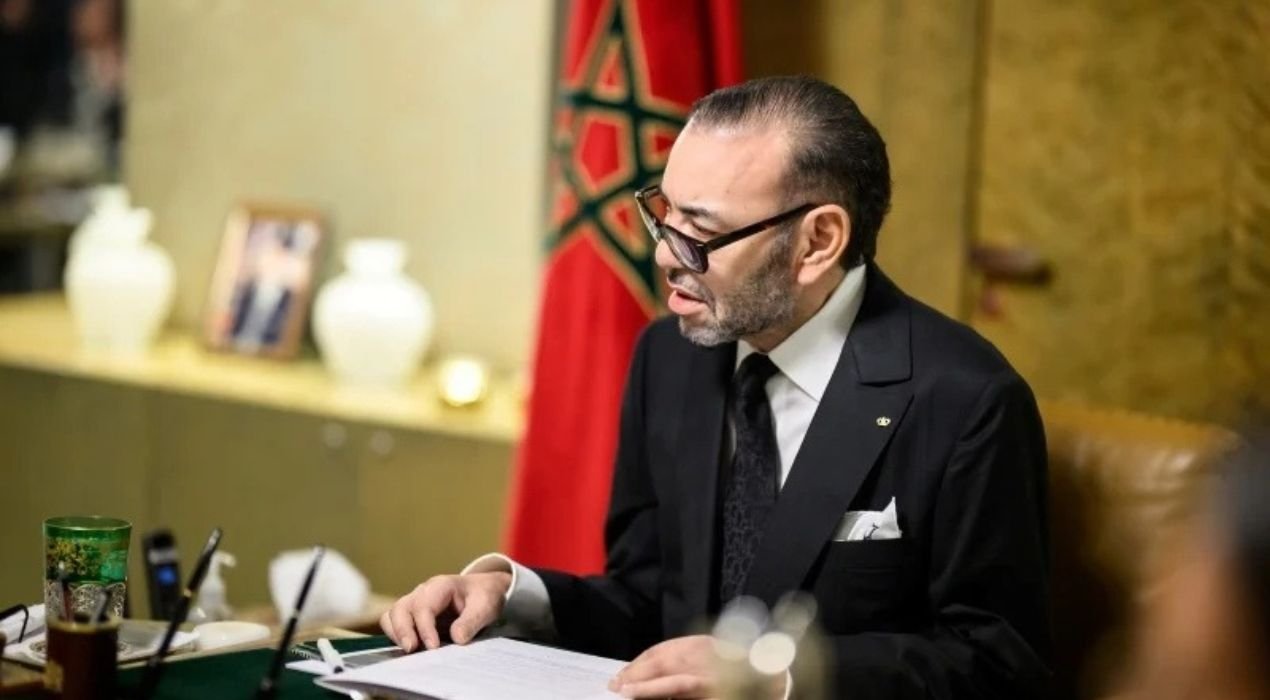
King Mohammed VI chaired a working meeting at the Royal Palace in Rabat on Wednesday, 4 November, devoted to managing the post-MINURSO period, a few days after the expiry of the United Nations mission’s mandate in Western Sahara.
In a statement, the Royal Cabinet reaffirmed Morocco’s commitment to the ceasefire, outlined arrangements for overseeing the UN mission’s withdrawal and reiterated the Kingdom’s position in favour of the autonomy plan as the only political solution to the conflict. The meeting was attended by Head of Government Fatima Ezzahra El Mansouri, the King’s Adviser Fouad Ali El Himma, Interior Minister Abdelouafi Laftit, and General Mohammed Berrid, Inspector General of the Royal Armed Forces (FAR) and Commander of the Southern Zone.
In its statement, the Royal Cabinet said the King had issued his High Instructions for the “firm and vigilant” implementation of the priorities set out. The text notably stressed Morocco’s continued commitment to the ceasefire, despite the end of the UN mission’s mandate.
The statement also criticised MINURSO’s record, arguing that it had repeatedly been unable to monitor compliance with the ceasefire and establish the consequences of violations. It further maintained that the circumstances in which the mission was established and its original functions had since been overtaken by events.
To oversee this new phase, Mohammed VI tasked the MINURSO Coordination Office, which operates under the Ministry of the Interior, with coordinating and monitoring the operation to wind down and withdraw the mission. According to the statement, this body will facilitate the various measures related to the operation and ensure that it proceeds in “smooth and orderly” conditions.
The Royal Cabinet also emphasised Morocco’s respect for its international commitments and its diplomatic doctrine, which is based on maintaining peace while safeguarding the Kingdom’s sovereignty.
Finally, the statement highlighted diplomatic developments favourable to Morocco’s position and the recognition of Moroccan sovereignty over the Sahara by several friendly and brotherly countries. It reiterated that the autonomy plan constitutes, in Rabat’s view, “the only political solution” capable of bringing the regional dispute to an end.
The working meeting comes ahead of the 51st anniversary of the Green March, scheduled for 6 November.











Leave a comment