

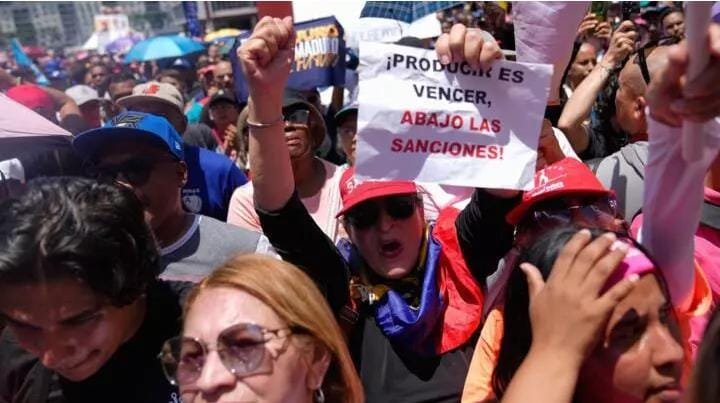
On Monday, March 23, the streets of the Venezuelan capital vibrated to the rhythm of anti-sanction slogans. Thousands of government supporters gathered to demand a definitive end to the restrictive measures imposed by Washington, as the country undergoes a complex transition since the start of the year.Since 2019, Venezuela has been hit by heavy economic sanctions that drastically limit its access to international markets. Although an easing of these measures began on January 3rd—following the capture of Nicolas Maduro—the current government and its supporters believe these steps do not go far enough.
The objective of this day of mobilization was clear: to obtain the repeal of all financial barriers that still hinder the development of the Caribbean nation. The Minister of the Interior,Diosdado Cabello, addressed an enthusiastic crowd, directly linking the end of sanctions to the return of social prosperity. According to him, lifting the blockades would allow Venezuela to regain the socio-economic standards of the Hugo Chavez era.
We will resume housing construction, we will restore a good healthcare system, and we will have the highest salaries in America,he insisted, framing the sanctions as the sole obstacle to national recovery. Despite pressure from the streets, the U.S. administration maintains a cautious approach. However, the geopolitical situation has shifted: International Context:The war in Iran and the surge in oil prices have pushed the U.S. Treasury toward greater pragmatism. Oil Opening:Washington now allows certain U.S. companies to deal with PDVSA, the Venezuelan state-owned oil company. Specific Licenses: New authorizations have been granted to multinationals to operate within the territory. Nevertheless, for Caracas, these measures are only partial victories. The government is now demanding total economic freedom of action to fully restore the country’s financial sovereignty.
Secondine GOZINGAN






Leave a comment