

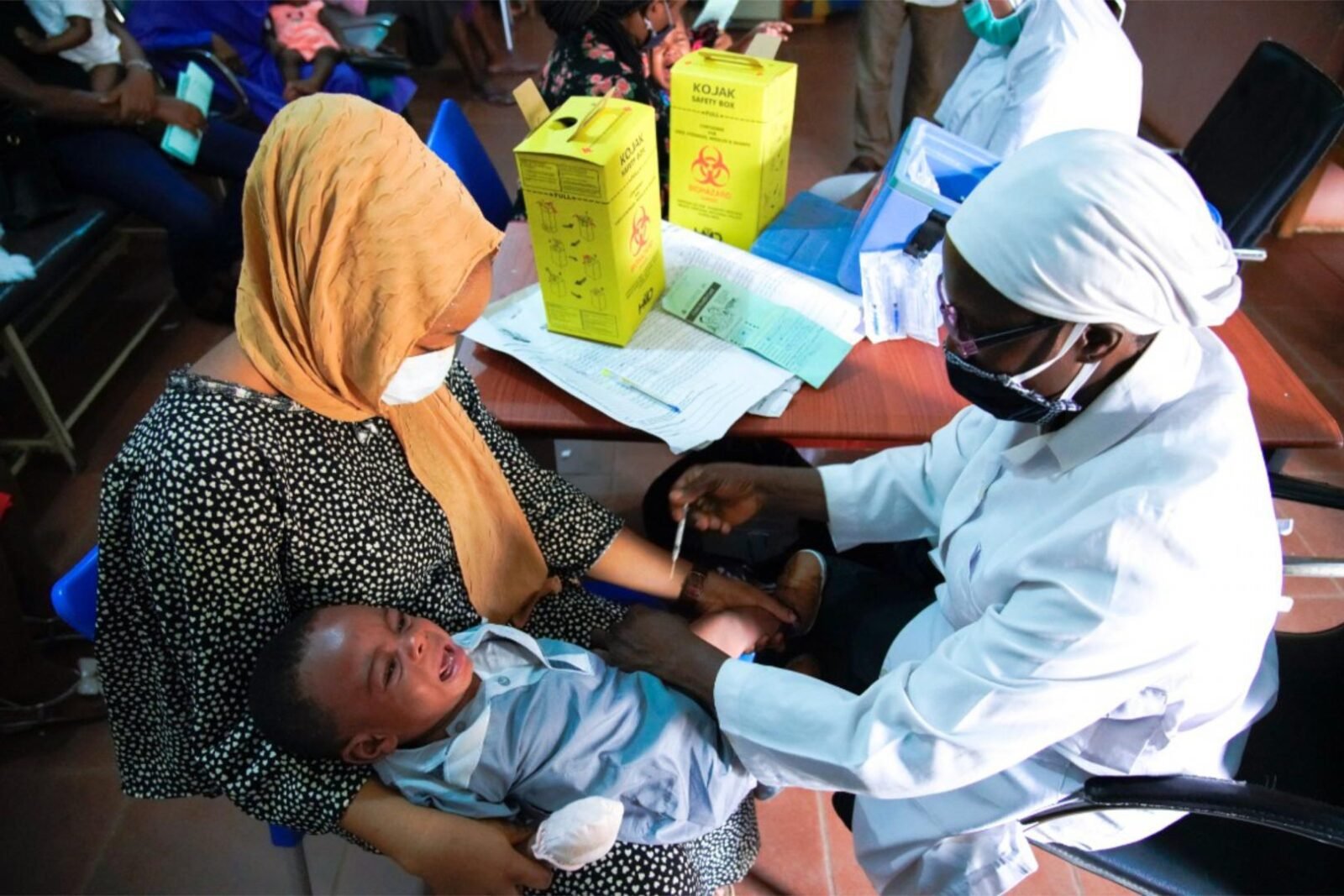
Despite significant progress in vaccination across Africa, millions of children still remain without access to vaccines. This is one of the key findings of a report published yesterday by the World Health Organization (WHO).
Titled “Towards Immunization Agenda 2030 targets,” the report highlights major achievements: 1.9 million lives were saved in 2024 thanks to vaccination, the wild poliovirus was eradicated in 2020, and more than one billion children have been vaccinated since 2000. However, deep inequalities persist.
So-called “zero-dose” children—those who have not received any vaccines—are often concentrated in fragile, hard-to-reach areas or regions affected by conflict. Their situation reflects not only limited access to vaccination, but also broader weaknesses in health systems.
For the WHO, identifying these children is a top priority, as explained by Dr. Benido Impouma, Director of Disease Prevention and Control at the organization: “What remains to be done is the capacity to identify these zero-dose children. The WHO is working to ensure that we are able to locate them in order to reduce their numbers. The issue of zero-dose children is not only about vaccination; it is also about health systems, which must be strong enough to reach children who do not necessarily have access to health services.”
Strengthening Local Capacity
Beyond vaccination, the WHO is calling for stronger local capacity and reduced reliance on external funding—an essential step toward true health sovereignty. This is underscored by the WHO Regional Director for Africa, Mohamed Janabi: “In the Democratic Republic of the Congo, we contained the Ebola outbreak within three months by working with teams already on the ground. We used the same approach to control the Marburg virus in Ethiopia. We have also succeeded in eliminating measles and rubella in countries such as the Seychelles, Mauritius, and Cape Verde. We are seeing strong commitment from member states toward local production, and the major priority today is health sovereignty.”
A major challenge for the years ahead will be to ensure equitable access to vaccination and strengthen the continent’s health sovereignty, so that no child is left behind, in line with the 2030 targets.







Leave a comment