

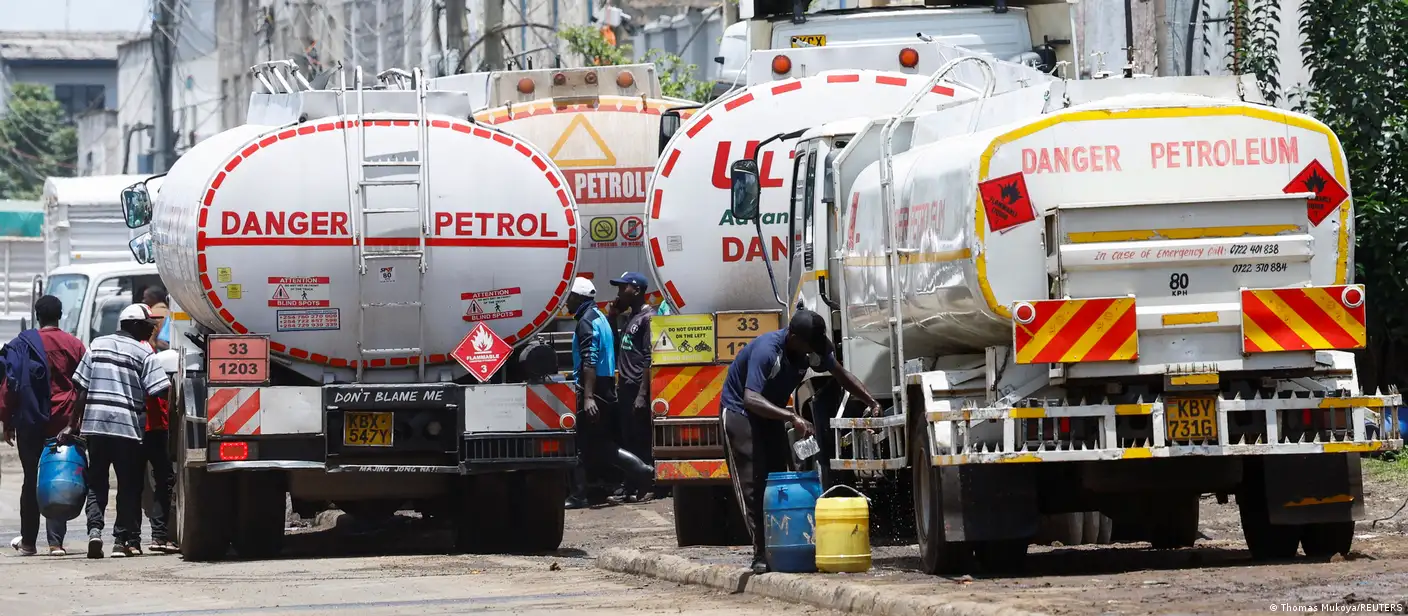
In Kenya, the presidency has announced the resignation of several senior officials responsible for managing the country’s petroleum stocks, amid allegations of data manipulation and irregular procurement practices.
As the country—heavily dependent on imports from the Gulf—seeks to diversify its energy supply and prevent shortages, the officials are accused of falsifying stock data and purchasing an oil cargo at an inflated price. Authorities say investigations are ongoing.
Three key figures in the sector have stepped down: Daniel Kiptoo Bargoria, director of the Energy and Petroleum Regulatory Authority; Joe Sang, managing director of the Kenya Pipeline Company; and Mohamed Liban, principal secretary in the State Department for Petroleum.
In a statement, the presidency said it had “accepted these resignations” and revealed that preliminary findings uncovered “irregularities in the supply chain” and “manipulation of data to justify emergency fuel imports” outside existing contracts and at significantly higher prices.
“Exploiting Global Price Surge and Public Concern”
According to the office of President William Ruto, the actions appear to have been intended to exploit rising global oil prices and growing public anxiety. “It appears that this action was taken to exploit the increase in global prices and public concern, thereby creating a false impression of an imminent fuel shortage,” the presidency stated.
Authorities also confirmed that other officials have been sanctioned and that arrests have already been made. However, no formal charges have been filed at this stage.
Regional Concerns Over Rising Energy Costs
The developments come amid broader concerns about global energy markets. According to a joint report by the African Union, the African Development Bank, and several UN agencies, the ongoing conflict in the Middle East poses a “serious risk” to Africa’s economies, potentially driving up the cost of living.
The Middle East accounts for 15.8% of Africa’s imports and 10.9% of its exports, according to the report, which also involved the United Nations Development Programme and the United Nations Economic Commission for Africa.





Leave a comment