

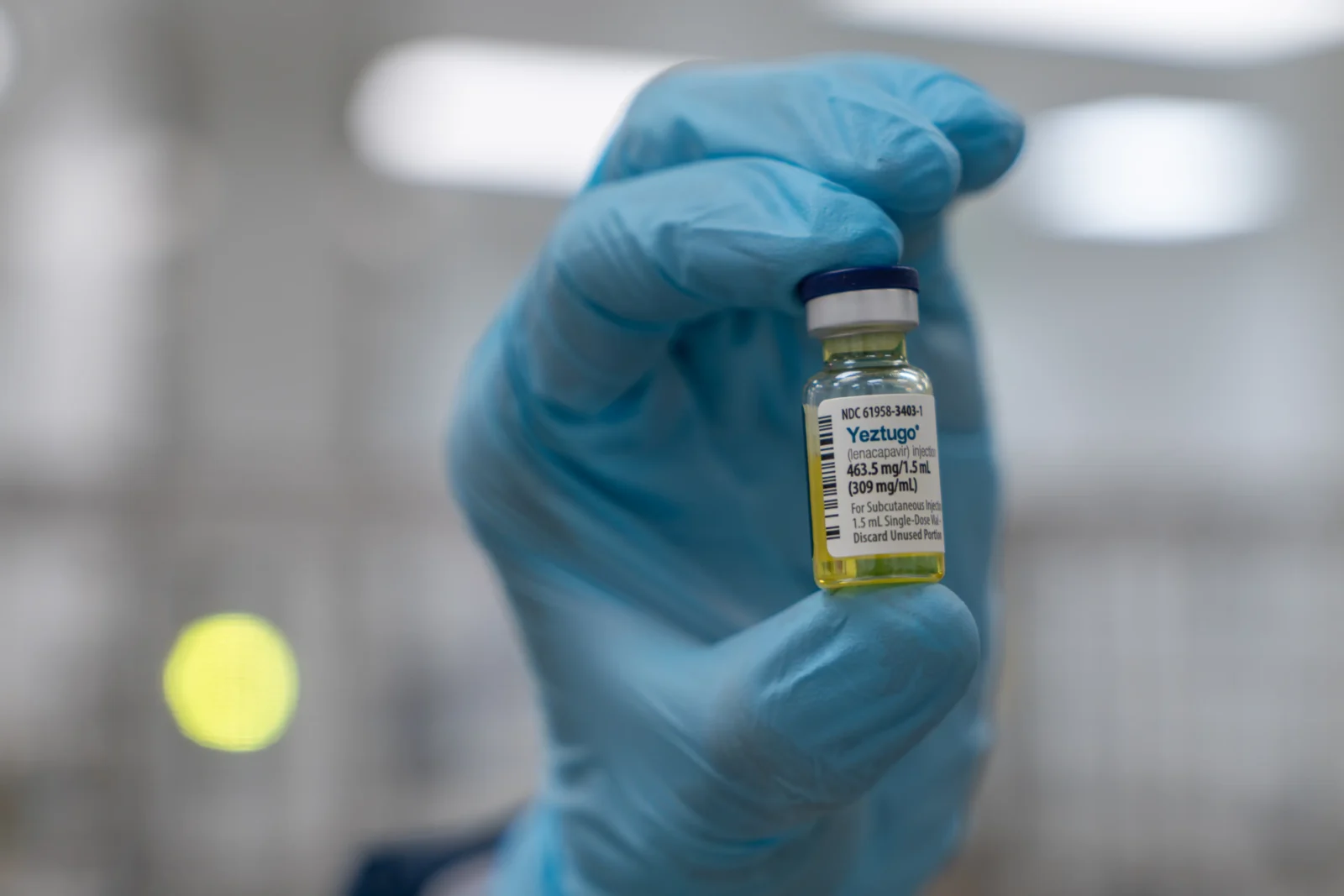
A new HIV prevention treatment described by specialists as “revolutionary” is being reported by Le Monde Afrique. It is being deployed on a large scale for the first time in Eswatini, a small southern African country landlocked between South Africa and Mozambique, which “aims to end the epidemic by 2028.” This is a major challenge, as a quarter of adults are living with HIV—“the highest prevalence in the world,” the newspaper notes.
The new treatment is lenacapavir. It involves two injections—one in each thigh—along with two tablets taken orally, followed by two more within 24 hours. This regimen provides protection for six months against nearly all risk of infection.
For Nompu, a 27-year-old sex worker for the past eight years, this is a major relief. Since the death of her parents, she has had to support her siblings, and “most of her clients do not want to use condoms,” she explains.
Eswatini is therefore the first country in the world to receive doses of the treatment, “as early as November 2025, less than six months after its approval by the U.S. regulatory authority.” “If HIV is virtually eliminated as a public health threat in Eswatini in the coming years, it could serve as a model for several other African countries,” said Mark Edington, Head of Grant Management at the Global Fund to Fight AIDS.
This breakthrough brings hope at a time of unprecedented cuts in foreign aid from the United States and several European countries, which have “caused major disruptions in the fight against HIV.”
“Narcotunnel” Discovered
Spanish police have dealt a blow to drug trafficking between Morocco and Spain with the discovery of a “narcotunnel designed to smuggle tons of hashish” into Europe, reports Telquel. The tunnel was found in Ceuta, one of Spain’s enclaves in northern Morocco. It reportedly includes “multiple levels, rails, wagons, and automated systems to transport goods without direct human intervention.”
“For years, Spanish customs officers intercepted trucks carrying massive quantities of drugs without ever being able to determine their exact origin,” explains Jeune Afrique. This gap led authorities to launch the operation that uncovered the tunnel. However, one major question remains: “Where exactly is the exit on the Moroccan side?” For now, the passage is flooded.
Explosions in Burundi
What is the toll after the explosions that occurred Tuesday evening at the army’s main ammunition depot in Bujumbura? Local media have remained relatively discreet on the matter. The army reported an initial official toll of 13 civilians killed and 54 injured, with no military fatalities reported.
On Tuesday night, “many residents fled their homes in panic, some trying to reach neighborhoods considered safer,” writes Afrik.com. “In a country whose recent history has been marked by civil war and several political crises, the explosions immediately raised fears of a coup attempt,” the outlet adds.
The incident was caused by a fire at the military ammunition depot, triggering a “series of explosions” powerful enough to be felt several kilometers away. “No homes near the military zone were spared,” reports Wakat Séra.
Could this disaster have been avoided? the Burkinabè outlet questions. “The main ammunition depot of the Burundian army is located in a densely populated area. And this is not an isolated case in Africa, where strategic sites that should be highly secured are often surrounded by residential neighborhoods,” the newspaper laments.









Leave a comment