

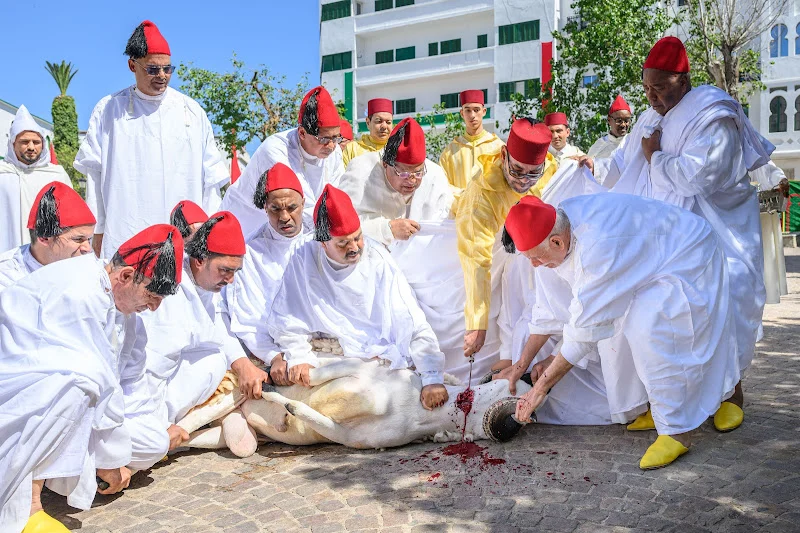
The celebration of Eid al-Adha in 2026 has taken on a renewed traditional character in Morocco, as citizens once again performed the ritual sacrifice of sheep after a rare suspension introduced last year. In 2025, King Mohammed VI had called on Moroccans to forgo the customary sacrifice due to an acute livestock shortage and soaring meat prices, a decision aimed at allowing herd recovery and easing financial pressure on households. Such a royal appeal is highly unusual and has reportedly been issued only a few times in Morocco’s recent history.
A Return to Tradition, but Prices Remain High
While the lifting of the informal suspension has been widely welcomed, many households say that the expected drop in livestock prices has not fully materialized this year.
In major cities such as Casablanca, streets were noticeably quiet during the holiday, with reduced traffic and families celebrating at home. Informal street scenes included rooftop barbecues and makeshift grills, where parts of sheep were prepared and shared among relatives and neighbors.
Despite economic pressures, many families still prioritized the ritual, often relying on extended family networks or rural connections to access livestock at lower cost.
Families Rely on Rural Ties to Afford Sacrifice
For many households, securing a sheep for Eid remains a significant financial burden. However, some managed to reduce costs through family arrangements in rural areas where livestock is more readily available.
Ayyoub, a 24-year-old resident of Casablanca who lost his father, said he was able to perform the sacrifice thanks to relatives living in mountainous regions.
“I feel very happy because my family is happy. Eid is a family celebration,” he explained.
He added that pre-ordering livestock months in advance and relying on trusted family breeders helped him avoid higher market prices, reflecting the informal coping strategies used by many Moroccan families during the holiday.








Leave a comment