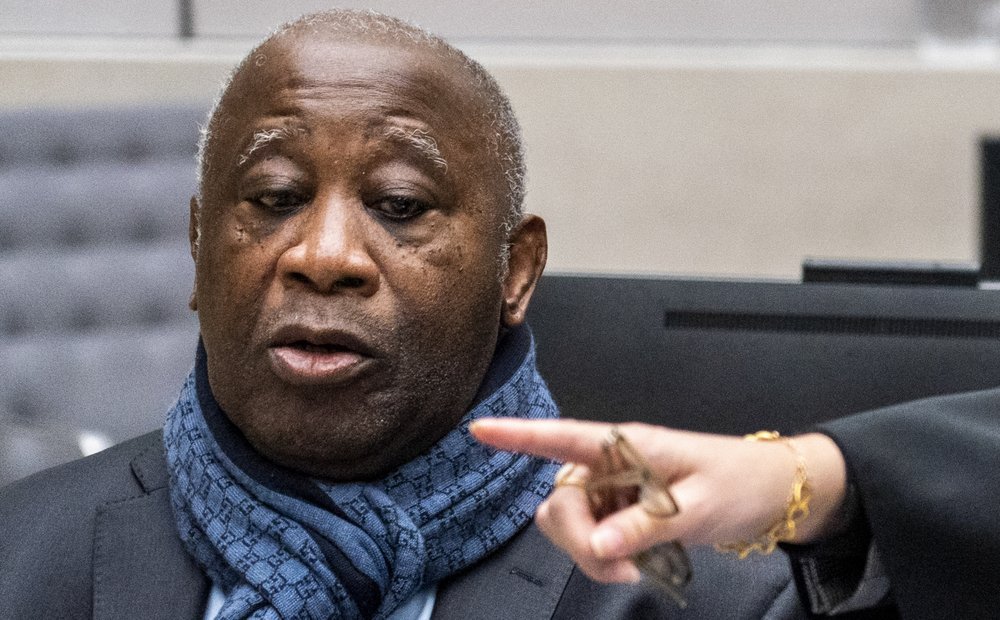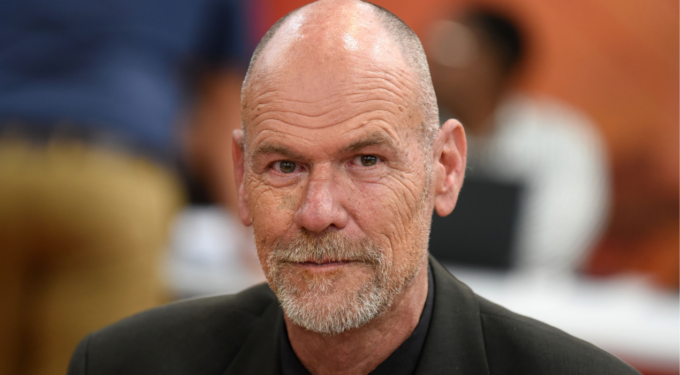
Former Ivorian president (2000–2011) and current opposition figure Laurent Gbagbo has been reconfirmed as head of his political party on Friday, despite previously signalling in late 2025 that he intended to step down. Now approaching his 81st birthday, Gbagbo was officially retained as president of the African Peoples’ Party – Côte d’Ivoire (PPA-CI) at the end of the party’s first ordinary congress, held in Abidjan. His reappointment came after approval by acclamation from several thousand delegates the day before.
Gbagbo was unable to contest the October 2025 presidential election, which was won by his long-time rival Alassane Ouattara, due to a criminal conviction that prevents him from being registered on the electoral roll.
His party, the PPA-CI, did not field or endorse any candidate in that election. It subsequently boycotted the legislative elections held in December and now has no parliamentary representation, with only a handful of mayors remaining in office.
On Friday, Gbagbo arrived at the congress venue at the Treichville Convention Centre in Abidjan to warm applause from supporters. Smiling, he briefly addressed delegates, saying: “I am happy to be in this warm atmosphere, thank you.”
He is expected to deliver a longer speech on Saturday in Songon, in southern Côte d’Ivoire.
In October 2025, Gbagbo had stated that he no longer wished to run for party leadership or “hold political office,” making his reconfirmation a notable reversal or continuation of internal party consensus.
During the congress, delegates also passed a motion supporting the Alliance of Sahel States (AES)—a confederation made up of Burkina Faso, Mali, and Niger, all governed by military juntas with strained relations with Abidjan.
The congress also confirmed disciplinary measures against several party figures accused of dissent. Ahoua Don Mello was expelled after running independently in the 2025 presidential election against party instructions, while Stéphane Kipré was suspended for 18 months after participating in legislative elections as an independent candidate.
The political movement once known as the “Ivorian left,” closely associated with Gbagbo’s presidency from 2000 to 2011, remains deeply fragmented. Several key figures from that era have since broken away from the PPA-CI, including Simone Ehivet Gbagbo, Gbagbo’s former wife, former close ally Charles Blé Goudé, and former Prime Minister Pascal Affi N’Guessan.
Gbagbo’s future political role will largely depend on his potential reinstatement on the electoral roll, which itself hinges on a presidential amnesty from Alassane Ouattara. Ouattara took power in 2011 following a violent post-election crisis that pitted the two men’s camps against each other.
Gianni Infantino’s decision to withdraw FIFA’s controversial World Cup investment proposal has failed to end criticism. UEFA says the current FIFA leadership has...
Byredacteur3.0août 1, 2026FIFA President Gianni Infantino has officially abandoned the FIFA Forward Enterprise (FFE) proposal following widespread criticism from football stakeholders and member associations. Gianni...
Byredacteur3.0août 1, 2026The Togolese government says it has “serious and corroborating evidence” against French...
Byredacteur3.0août 25, 2026Senegal's National Assembly concluded its extraordinary session on Thursday, August 20, 2026,...
Byredacteur3.0août 21, 2026Cameroon's 93-year-old President Paul Biya returned to Yaoundé on Thursday after spending...
Byredacteur3.0août 21, 2026Nigeria’s presidential and parliamentary election campaign officially begins on Wednesday, August 19,...
Byredacteur3.0août 19, 2026Excepteur sint occaecat cupidatat non proident
Leave a comment