


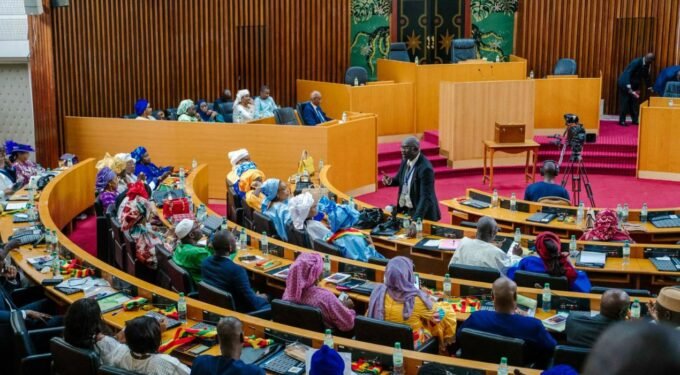
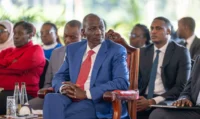
Benin’s Senate now has its leadership team. Meeting on Thursday, August 6, 2026, in Porto-Novo, members of the country’s newly established upper chamber of Parliament elected former President Patrice Talon as Senate President for a five-year term.
The vote marks Talon’s return to the forefront of Benin’s political landscape, less than three months after he stepped down as head of state on May 24, 2026.
The former president was the only candidate for the position and secured 24 votes out of 25 ballots cast, with one blank vote and no vote against him. The result reflects broad support among senators, whose members are appointed rather than directly elected by popular vote.
With his election, Patrice Talon becomes the third-ranking figure in Benin’s state protocol, behind the President of the Republic and the Vice-President.
New Senate leadership team officially established
Beyond the election of its president, the Senate also completed the formation of its executive bureau.
Former National Assembly Speaker Louis Vlavonou was elected Vice-President of the Senate. Former Interior Minister Alassane Séïdou was appointed Rapporteur, while former Labour Minister Adidjath Mathys will serve as his deputy.
The composition of the Senate leadership brings together several experienced political figures who are expected to play a key role in shaping the work of the new parliamentary institution.
Patrice Talon pledges unity, peace and democratic stability
Following his election, Patrice Talon expressed his commitment to serving the Senate and highlighted the importance of consensus and national unity.
“I will give the best of myself. We have all experienced in recent days an extraordinary atmosphere that has erased our differences. Faced with this responsibility, we must work as one family, as friends, to strengthen national unity, peace and democracy,” Talon said after his election.
The former head of state described the Senate as a “chamber of wisdom, advice, reconciliation and appeasement”, emphasizing its role as a space for dialogue and political balance.
During the Senate’s installation ceremony, the oldest member of the chamber also urged senators to establish the institution’s foundations through objective decisions and responsible actions.
A political return closely watched in Benin
The creation of the Senate had generated significant debate in Benin’s political circles. Critics had suggested that the new institution could provide Patrice Talon with a platform to maintain political influence after leaving the presidency.
That scenario has now become reality, as the former leader returns to public life through one of the country’s highest institutions.
Former President Thomas Boni Yayi, leader of the opposition party Les Démocrates, was seen by some observers as the only figure capable of challenging Talon for the Senate presidency. However, lacking sufficient support among senators, he did not enter the race.
Benin’s Senate enters a new era with strategic responsibilities
Under Benin’s legal framework, the Senate is tasked with contributing to the regulation of political life and strengthening institutional stability. The upper chamber meets four times a year during ordinary sessions and is expected to play a role in promoting dialogue and democratic balance.
The institution also holds certain powers related to civic and political rights procedures for elected officials, with exceptions for the President of the Republic, the Speaker of the National Assembly and the President of the Economic and Social Council.
With Patrice Talon at its helm, Benin’s Senate begins a new chapter. The former president will now face the challenge of transforming the young institution into a credible platform for consultation, mediation and political stability.









Leave a comment