

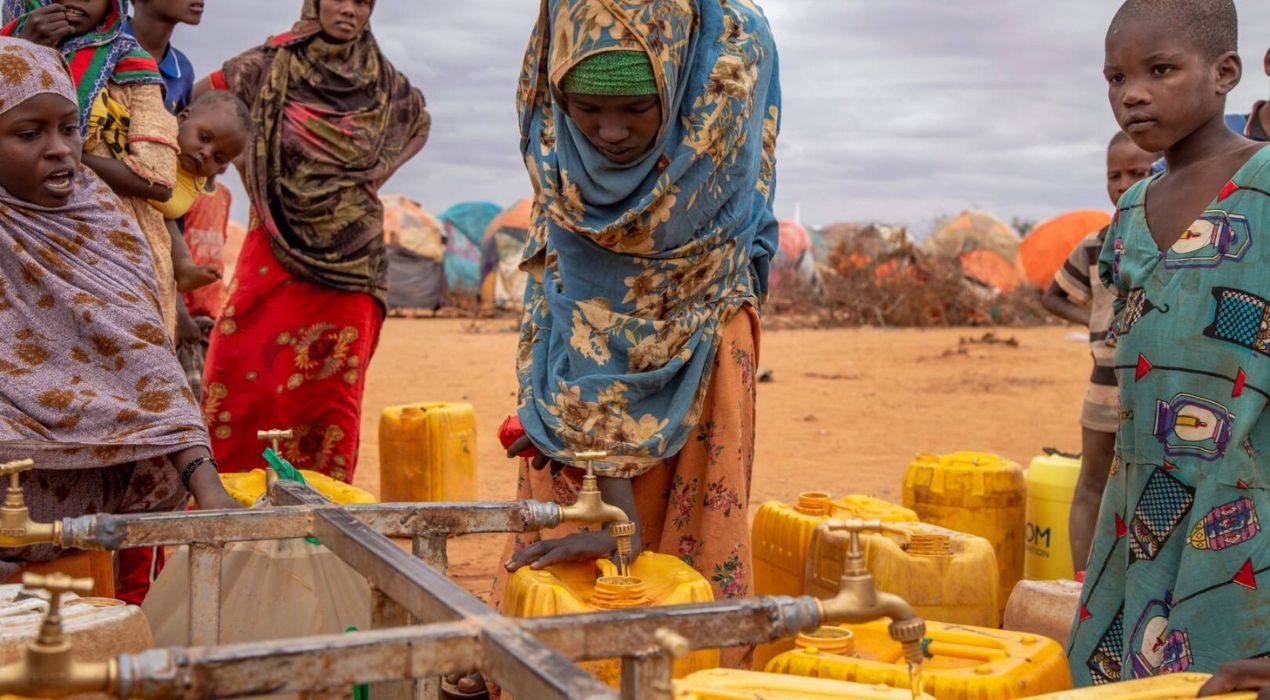
Somalia is facing one of the world’s worst malnutrition crises, according to the World Food Programme (WFP). Around 6 million people — roughly one-third of the country’s population — are currently experiencing acute food insecurity, while nearly 2 million are facing emergency levels of hunger.
The crisis is being driven by repeated climate shocks, persistent insecurity and a sharp decline in international humanitarian funding.
“These are not abstract figures: they are families exhausting every option they have left to survive,” the WFP warned.
Nearly 2 million children are expected to suffer from acute malnutrition in 2026. More than 200,000 people were displaced during the second quarter of the year alone.
Drought deepens Somalia’s food crisis
Somalia is facing a severe drought after inadequate rainfall across several consecutive seasons. Water shortages have led to crop failures and livestock losses, further undermining the livelihoods of vulnerable communities.
The situation has also been compounded by rising fuel and food prices, while ongoing insecurity linked to the al-Shabaab insurgency and local armed clashes continues to disrupt access to food and humanitarian assistance.
Displaced families face worsening conditions
The situation is particularly critical in displacement camps around Baidoa in southwestern Somalia, where Médecins Sans Frontières (MSF) is providing medical assistance.
According to the organisation, one in two children in the camps suffers from acute malnutrition, while one in four is experiencing severe acute malnutrition. Around one-third of families reportedly survive on just one meal a day.
MSF health adviser Mitchell Sangma described the situation as “widespread hunger”, with new displaced families arriving in Baidoa every week.
The organisation has already admitted more than 80% of the number of patients treated throughout the previous year, while many children are arriving with severe medical complications after months of food shortages.
Malnutrition compounded by disease
Malnutrition is also increasing children’s vulnerability to infectious diseases.
MSF says many severely malnourished children are suffering from diseases such as measles and diphtheria. Some patients are forced to return to hospital after being discharged because they go back to environments where they lack adequate food and access to safe drinking water.
Long queues for water and medical care have become a common sight in displacement camps, according to humanitarian workers.
MSF is warning that the situation could deteriorate further without an urgent increase in assistance.
Humanitarian funding falls short
The humanitarian response is struggling to keep pace with the scale of the crisis as international funding declines.
According to the Integrated Food Security Phase Classification (IPC), humanitarian food assistance was covering only around 12% of the 6 million people facing acute food insecurity as of May.
The funding crisis has also affected the health sector. More than 200 health and nutrition centres have reportedly closed, according to UNICEF, which described the budget cuts as unprecedented.
The situation could become even more complicated later this year. A potentially strong El Niño-related weather event could bring heavy rainfall to Somalia, raising the risk of flooding and creating additional challenges for communities already weakened by drought and hunger.
For humanitarian organisations, the warning is increasingly urgent: without additional funding and sustained food, health and water assistance, Somalia’s hunger crisis risks becoming even more severe.







Leave a comment