

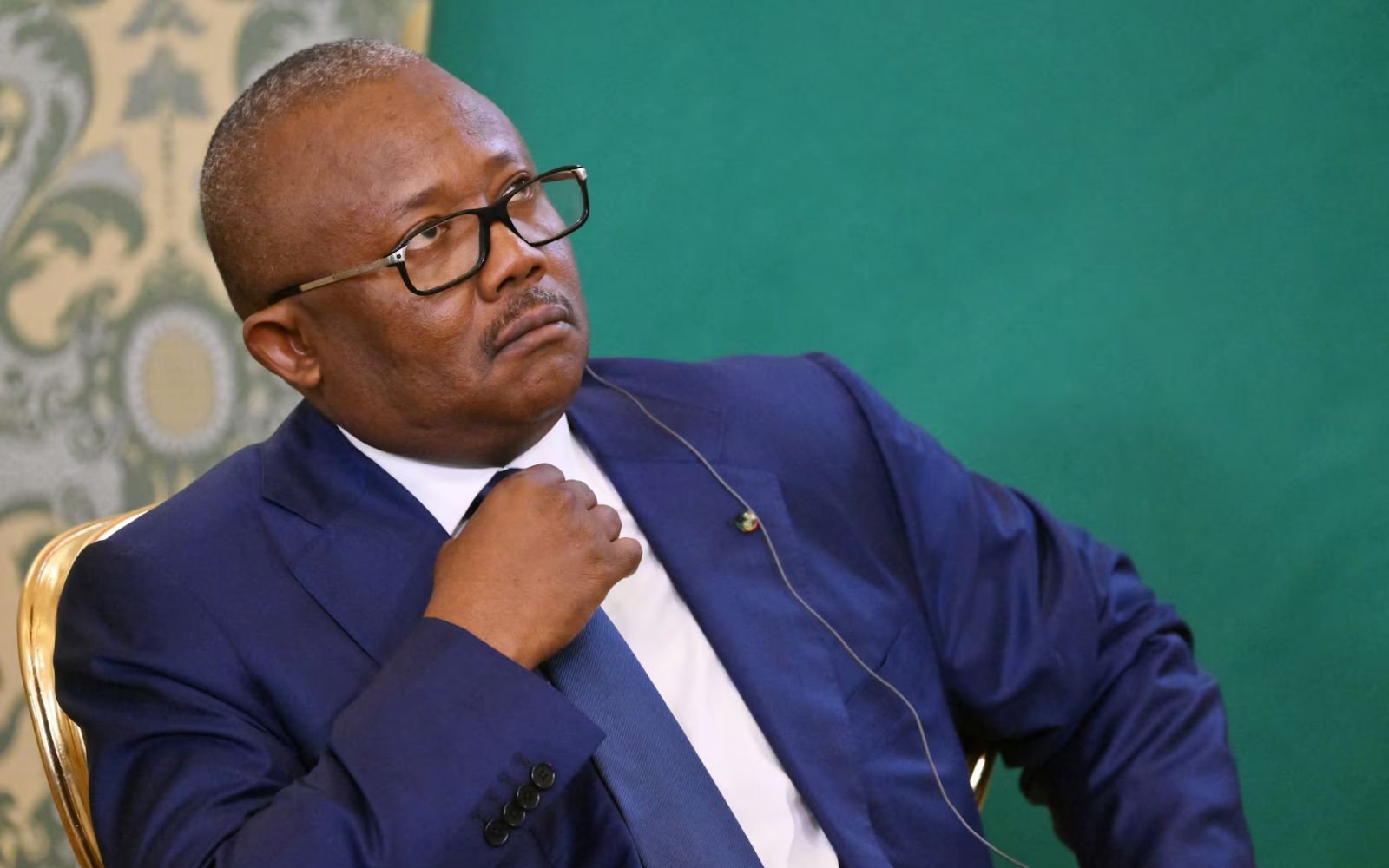
Ousted Guinea-Bissau President Umaro Sissoco Embaló has announced his intention to contest the country’s next presidential election, scheduled for December 6, 2026. Deposed in a military coup in November 2025 and living in exile, Embaló has also announced plans to return to the country on October 4, a move that has drawn criticism from opposition figures. <Cite refs={[« turn322967search3″, »turn322967search5 »]}/>
“Yes, I will be a candidate,” Embaló said on Monday, September 28, confirming his intention to run in an interview with Jeune Afrique.
The former head of state was overthrown on November 26, 2025, shortly before the announcement of provisional results from the presidential and legislative elections. The military takeover halted the electoral process, while opposition figures claimed that their candidate had won the presidential vote.
At the time, some observers questioned whether Embaló had played a role in the coup to prevent the publication of the results. These allegations remain contested.
Transition authorities address his possible candidacy
Fernando Vaz, spokesperson for the military-appointed transitional government, said Embaló could seek to contest the election, although the candidacy has not yet been formally registered.
“Every Bissau-Guinean citizen has the constitutional right to stand as a candidate. Proposals will be examined by the competent authorities,” Vaz said.
He added that reports of Embaló’s imminent return had circulated widely, noting that transitional President General Horta N’Tam had stated that any Bissau-Guinean citizen was free to return home.
PAIGC raises concerns
Embaló’s planned return has raised concerns among opposition leaders, particularly Domingos Simões Pereira, head of the African Party for the Independence of Guinea and Cape Verde (PAIGC).
Pereira said the announcement had caused widespread surprise given the current political climate, in which political activities remain suspended and the military continues to control the country.
He argued that the conditions surrounding the transition could favour Embaló’s return to power while limiting opportunities for other political forces.
Iancuba N’Djai, a PAIGC lawmaker living in exile in Dakar, described the planned return as a “staged performance.” Like other opposition figures, he alleged that the former president had orchestrated the military takeover to interrupt the electoral process and conceal a possible defeat. These accusations have not been independently established.
Agnello Regala, coordinator of the opposition coalition PAI Terra Ranka, also pointed to the suspension of political activities and constitutional changes as reasons for concern. Opposition leaders fear that these measures could create conditions favourable to Embaló’s political comeback.
Return expected on October 4
Embaló announced on social media that he intends to return to Guinea-Bissau on Sunday, October 4, calling for his arrival to take place in an atmosphere of harmony, tolerance and mutual respect.
The military authorities have not yet issued a formal response specifically addressing his announced return.
Meanwhile, preparations have reportedly begun at the headquarters of Embaló’s party ahead of his expected arrival.
Elections planned amid political uncertainty
The transitional authorities have scheduled presidential and legislative elections for December 6, 2026, as part of the process intended to restore civilian rule.
On August 30, the country also held a contested constitutional referendum on a new system that would strengthen presidential powers and replace the previous semi-parliamentary arrangement. Official results reported approval by approximately 70% of voters.
Under the transitional charter adopted in December 2025, General Horta N’Tam is barred from running in the next presidential election.
Embaló’s planned return and declared candidacy add another layer of uncertainty to Guinea-Bissau’s transition, as the country prepares for elections following months of military rule and political restrictions.







Leave a comment