

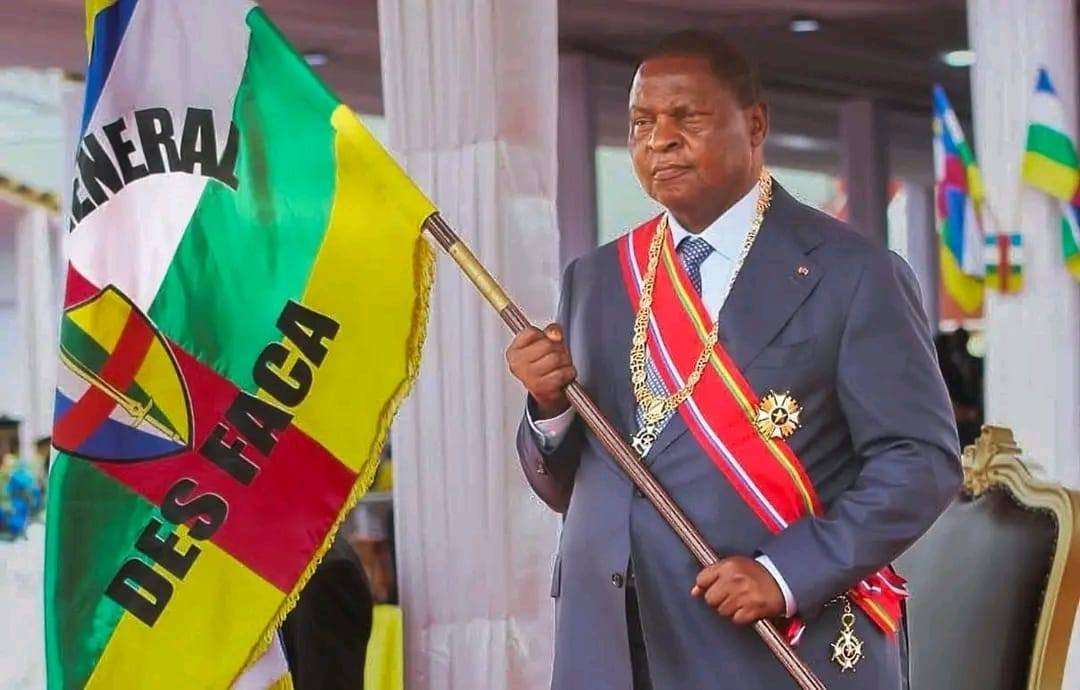
President Faustin-Archange Touadéra was officially sworn in on March 30, 2026, after securing 76.15% of the vote in the latest presidential election. The inauguration ceremony took place at the Barthélémy Boganda Sports Complex in front of nearly 20,000 attendees and several African heads of state, but unfolded in a tense political climate.
A contested re-election
Re-elected for a third term in the Central African Republic, Touadéra used his speech to promote unity, pledging to work with all citizens to “complete national reconciliation” and accelerate the country’s transformation.
However, the election was boycotted by a significant part of the opposition, which continues to question both the legitimacy and inclusiveness of the process.
Opposition rejects unity message
Leading opposition figure Martin Ziguélé, head of the Movement for the Liberation of the Central African People (MLPC) and spokesperson for the Republican Bloc, dismissed the president’s call for unity.
He argued that the خطاب was primarily aimed at the international community, portraying Touadéra as a unifying leader, while in reality the government remains “closed to debate and dialogue.”
Calls for genuine political dialogue
Martin Ziguélé emphasized the need for a true political dialogue, distinct from the “republican dialogue” initiated by the authorities. According to him, that process mainly served as a platform for constitutional changes rather than addressing core political issues.
He called for inclusive discussions focused on institutional reforms to ensure the country remains a functioning republic.
“The essence of democracy is not just holding elections, but ensuring they are fair and inclusive,” he stated, criticizing the electoral conditions.
A decisive term ahead
As Faustin-Archange Touadéra begins his third term, the challenge will be to bridge deep political divisions and restore trust.
Between promises of reconciliation and persistent opposition skepticism, the coming months will be crucial in determining whether meaningful reforms and national dialogue can take place.





Leave a comment