

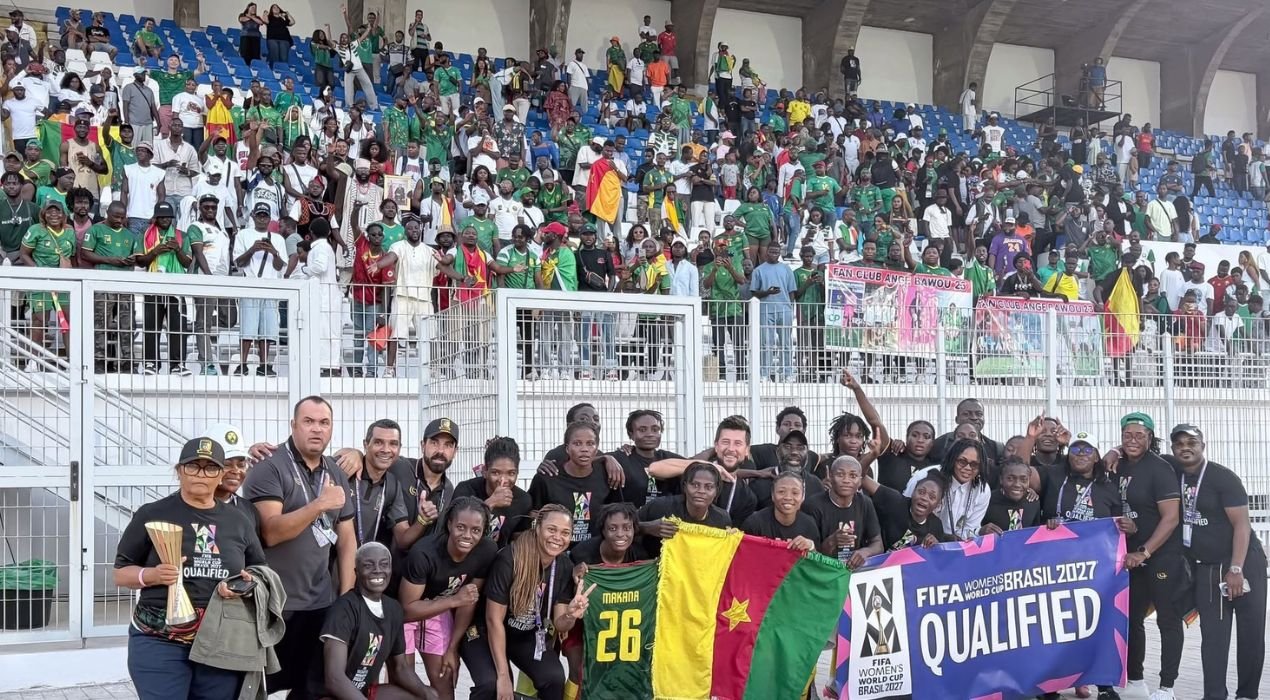
The ticketing situation ahead of the Women’s Africa Cup of Nations semi-final between Morocco and Cameroon has raised concerns among supporters, particularly after Cameroon’s ambassador in Morocco requested 1,000 tickets for fans of the Indomitable Lionesses.
However, the current difficulties surrounding ticket availability need to be placed in the proper context. There is no evidence of a policy designed to exclude Cameroonian supporters from the stadium.
The ticketing process is not controlled solely by the FRMF
The first point concerns responsibility for ticket sales.
The 2026 WAFCON ticketing operation is being conducted through the official system established by the Confederation of African Football. CAF provides the official ticketing platform as well as a dedicated after-sales service.
The FRMF, therefore, does not independently decide who receives tickets or how all available seats are distributed.
This is an important distinction as the debate over the Morocco-Cameroon match continues to grow.
High demand is putting pressure on availability
The second factor is the exceptional demand surrounding the tournament.
Morocco is hosting the WAFCON and has enjoyed strong support from its home crowd throughout the competition. Matches involving the Atlas Lionesses have generated significant interest, with many tickets secured by local supporters well before the semi-final stage.
Now that Morocco has reached the final four, demand has increased even further.
A limited number of available seats can therefore be explained by the combination of stadium capacity and the popularity of the fixture.
That situation should not automatically be interpreted as a political decision or an attempt to discriminate against Cameroon fans.
The 1,000-ticket request
The issue became more visible after S.E. Mouhamadou Youssifou, Cameroon’s ambassador to Morocco, sought a dedicated allocation of 1,000 tickets for Cameroonian supporters.
The request consists of 50 Category 1 tickets and 950 Category 3 tickets.
The matter is now being discussed by the parties involved, including CAF and the local organising committee, with the aim of finding ways to facilitate access for supporters of both sides.
No reason to turn football into a diplomatic controversy
Morocco and Cameroon have longstanding and friendly relations, and football has traditionally been an important part of the relationship between African countries.
The current ticketing difficulties should therefore be approached as an operational issue rather than a diplomatic confrontation.
There is no indication of a plot or an official discriminatory instruction targeting Cameroonian supporters.
What is clear is that demand for one of the tournament’s biggest games has been exceptionally high.
The spotlight returns to the pitch
The football itself offers plenty of reasons for excitement.
Morocco are looking to reach the final on home soil after overcoming South Africa, while Cameroon booked their place in the semi-finals with a major upset against Nigeria.
The encounter in Rabat will decide one of the two finalists of the 2026 WAFCON.
For supporters on both sides, the priority now is clear: finding practical solutions that allow them to be part of the occasion.
The Morocco-Cameroon semi-final should ultimately be remembered not for a ticketing dispute, but as a celebration of African women’s football involving two of the continent’s leading football nations.










Leave a comment