

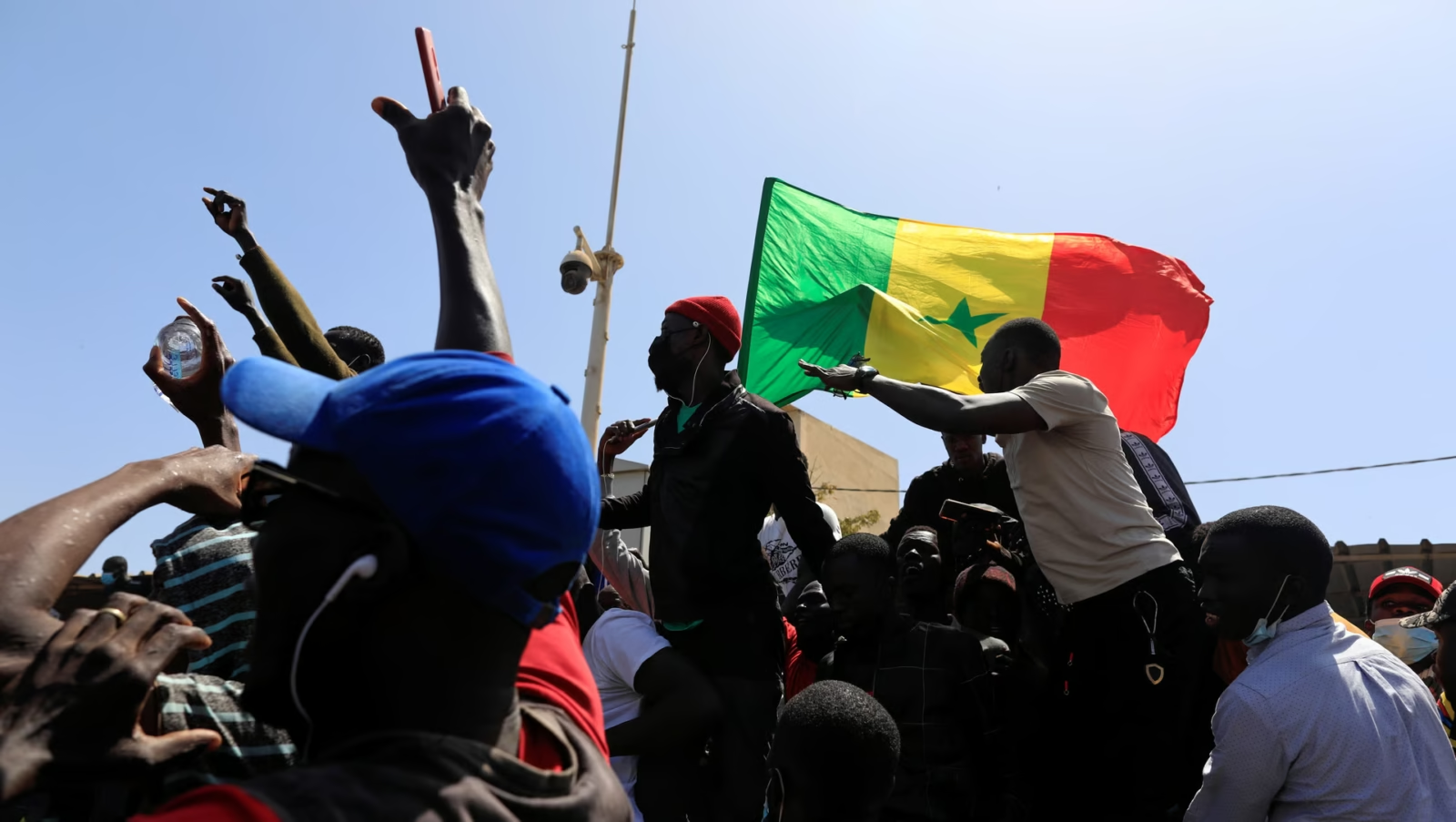
Social tensions are rising in Senegal. On April 8, 2026, thousands of people — including teachers, healthcare workers, transport operators, and dockworkers — took to the streets of Dakar at the call of the United Trade Union Front for the Defense of Labor.
At the heart of the protest is a shared accusation: the government has failed to honor its commitments. Unions are demanding the implementation of the national social stability pact signed in May 2025, which they say remains unfulfilled. They also denounce the decline in purchasing power and violations of workers’ rights.
“There are layoffs everywhere”
Habitatou Sylla, president of the National Women’s Movement of the Confederation of Autonomous Trade Unions of Senegal, described a worrying situation:
“There are strikes everywhere. There are layoffs everywhere. It is important that this march takes place so that the Senegalese authorities understand the difficult living conditions people are facing.”
Among the protesters were many healthcare workers, easily identifiable in their white coats, demanding the payment of housing allowances that were promised but never delivered. They were joined by construction workers, a sector that has been struggling for nearly two years due to the suspension of major projects.
“We are asking the government to allow construction sites to reopen. Unemployment keeps rising because there is no work,” said Assane Ndiaye, a construction worker.
Warning ahead of a general strike
Anger is also growing at the Port of Dakar. Patrick Gomis, who has worked there for years, spoke about precarious working conditions:
“We have no medical coverage. We work like daily laborers despite having qualifications. Some of us worked for seven or nine years, and then suddenly we are told to stop working.”
Unions warn that this protest is only a first step. A notice for a general strike has already been filed, and further actions are expected if the government fails to respond.
The unrest comes amid a challenging economic context. Public and para-public debt was estimated at 132% of GDP by the end of 2024. Authorities have accused the previous administration of former President Macky Sall of concealing the true state of public finances, particularly regarding debt and the budget deficit.
As a result, the International Monetary Fund (IMF) has suspended its $1.8 billion aid program agreed in 2023, pending clarification and commitments from the new authorities.






Leave a comment