

Niger and Algeria officially put into service a 100 Gbit/s fiber optic link on Tuesday, October 06, 2026. The project should strengthen Niger’s connectivity and its openness to North Africa.
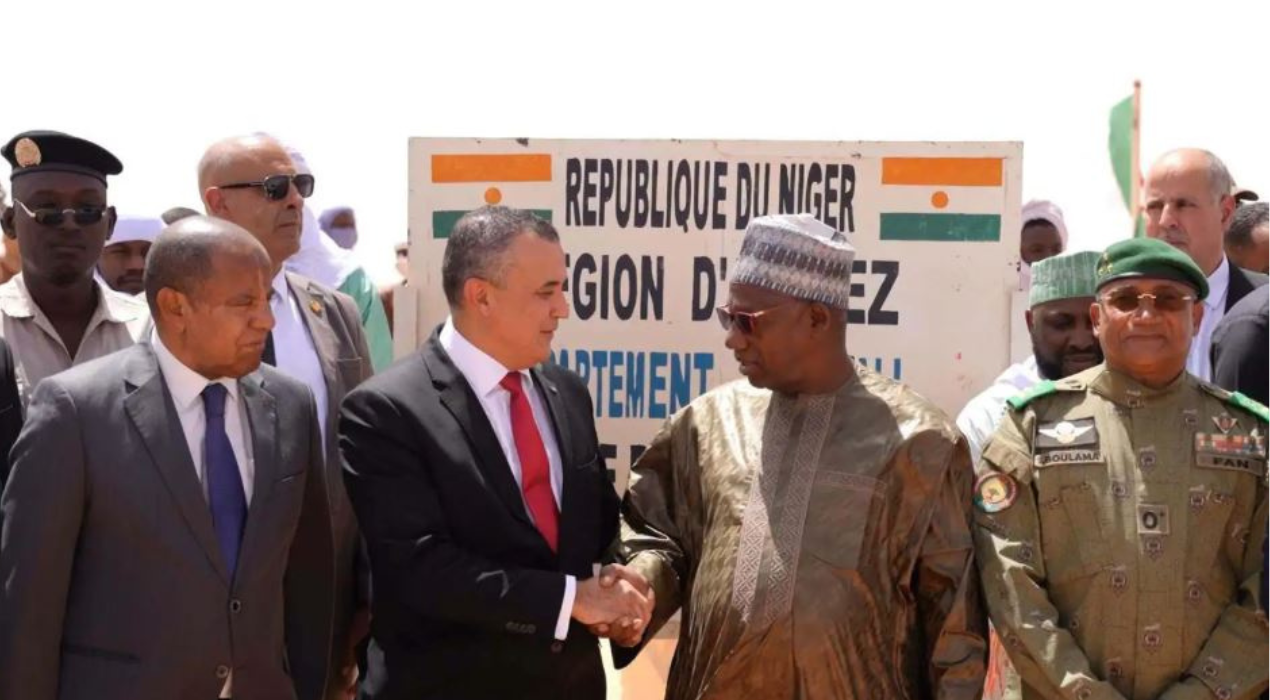
Niger and Algeria are strengthening their cooperation in digital. On Tuesday, October 6, 2026, the two countries officially launched the operation of a fiber optic link with an initial capacity of 100 gigabits per second. The ceremony was held in Assamaka, on the border between the two countries. It brought together Hamani Kargné, Nigerian Minister of Communication and New Information Technologies, and Sid-Ali Zerrouki, his Algerian counterpart. The connection connects In Guezzam, in the south of Algeria, to the Arlit-Agadez axis, on the Nigerian side. The work was carried out by Algérie Telecom and Niger Telecoms.
A capacity of 100 gigabits per second
The new link offers an initial capacity of 100 Gbps. This infrastructure should improve data exchanges between the two national networks. For the Nigerian authorities, the challenge goes beyond the simple connection between two operators. The project should help reduce the digital isolation of certain areas and facilitate access to national and international networks for people, administrations and businesses. Minister Hamani Kargné also highlighted the prospect of more reliable and less expensive telecommunications services.
The Niger-Algeria link is part of a much broader project. It is a link in the Trans-Saharan fiber optic Ridge. Niger also wants to extend this dynamic to other neighboring countries. The program presented by the authorities provides in particular for the strengthening of fiber junctions with Burkina Faso and Benin.
A national data centre must also be expanded and put into production as part of this strategy.
An alternative to traditional digital roads
For Niamey, the issue is also strategic. The country seeks to multiply its connection routes and reduce its dependence on certain digital routes. The link with Algeria offers in particular land access to the north. It can thus strengthen the integration of Niger into regional and international digital exchanges. The project comes in a context where the Sahelian states are looking to develop their digital infrastructures. For Niger, the objective is now to transform this new technical capacity into accessible and useful services to the economy.
The commissioning of the 100 Gbit/s therefore marks a step. The real challenge now will be to extend this connectivity to the rest of the country and make the infrastructure in place profitable.










Leave a comment